
In B2B marketing, campaign success hinges on more than just creativity; it demands a seamlessly integrated technology stack. For marketing operations and RevOps leaders using platforms like Salesforce, HubSpot, or Pardot (MCAE), selecting the right marketing campaign management tools is a strategic imperative. The wrong choice leads to data silos, inefficient workflows, and missed revenue opportunities. The right one aligns marketing and sales, provides clear attribution, and turns complex go-to-market strategies into measurable outcomes.
This guide analyzes leading tools through the lens of a B2B marketing operations professional. We focus on critical factors like integration capabilities with your existing CRM, scalability for growing teams, and the ability to provide actionable insights needed to drive predictable growth. Each review includes key features, ideal use cases, and direct links to help you make an informed decision and optimize your technology stack effectively. Let’s explore the solutions that can streamline your operations and maximize campaign ROI.
1. HubSpot Marketing Hub
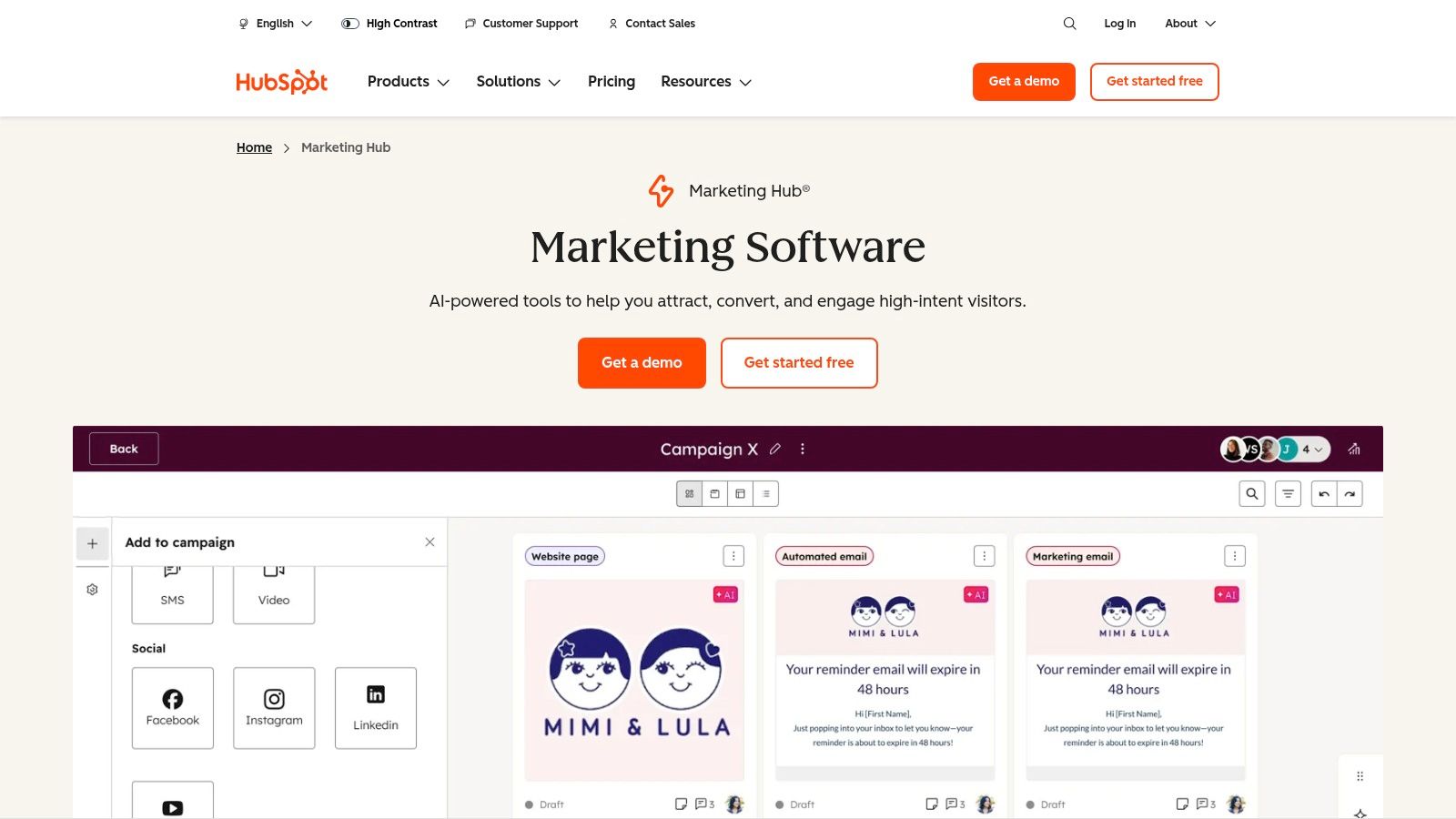
HubSpot Marketing Hub is a comprehensive, all-in-one platform designed to manage the entire marketing funnel. Its core strength lies in its native, seamless integration with the HubSpot CRM, providing a single source of truth for customer data that informs every campaign action. This tight coupling allows marketing operations managers to build sophisticated campaigns—from email nurtures to ad retargeting—based on real-time customer behavior and sales activities. The platform is one of the most effective marketing campaign management tools for B2B organizations prioritizing alignment between sales and marketing teams.
Key Features & Use Case
The visual workflow builder is a standout feature, enabling users to map complex, multi-step customer journeys with conditional logic for lead scoring and segmentation. A B2B tech company, for example, could use workflows to automatically assign leads based on firmographic data, enroll them in a targeted email sequence, and notify a sales rep once the lead’s score reaches a specific threshold. This level of automation is central to its value proposition. You can get more insights on how to achieve this through our guide to CRM and marketing automation integration.
Pricing & Implementation
HubSpot scales from a free plan to enterprise tiers, with paid plans starting at $18/month. However, pricing is contact-based, which can become costly as your database grows. The Professional and Enterprise plans also require a mandatory onboarding fee, a crucial budget consideration for new adopters.
- Pros: Deep CRM integration, extensive educational resources (HubSpot Academy), and a scalable model suitable for growing businesses.
- Cons: Contact-based pricing can escalate costs unexpectedly, and high-tier plans come with significant onboarding fees.
Website: https://www.hubspot.com/products/marketing
2. Mailchimp
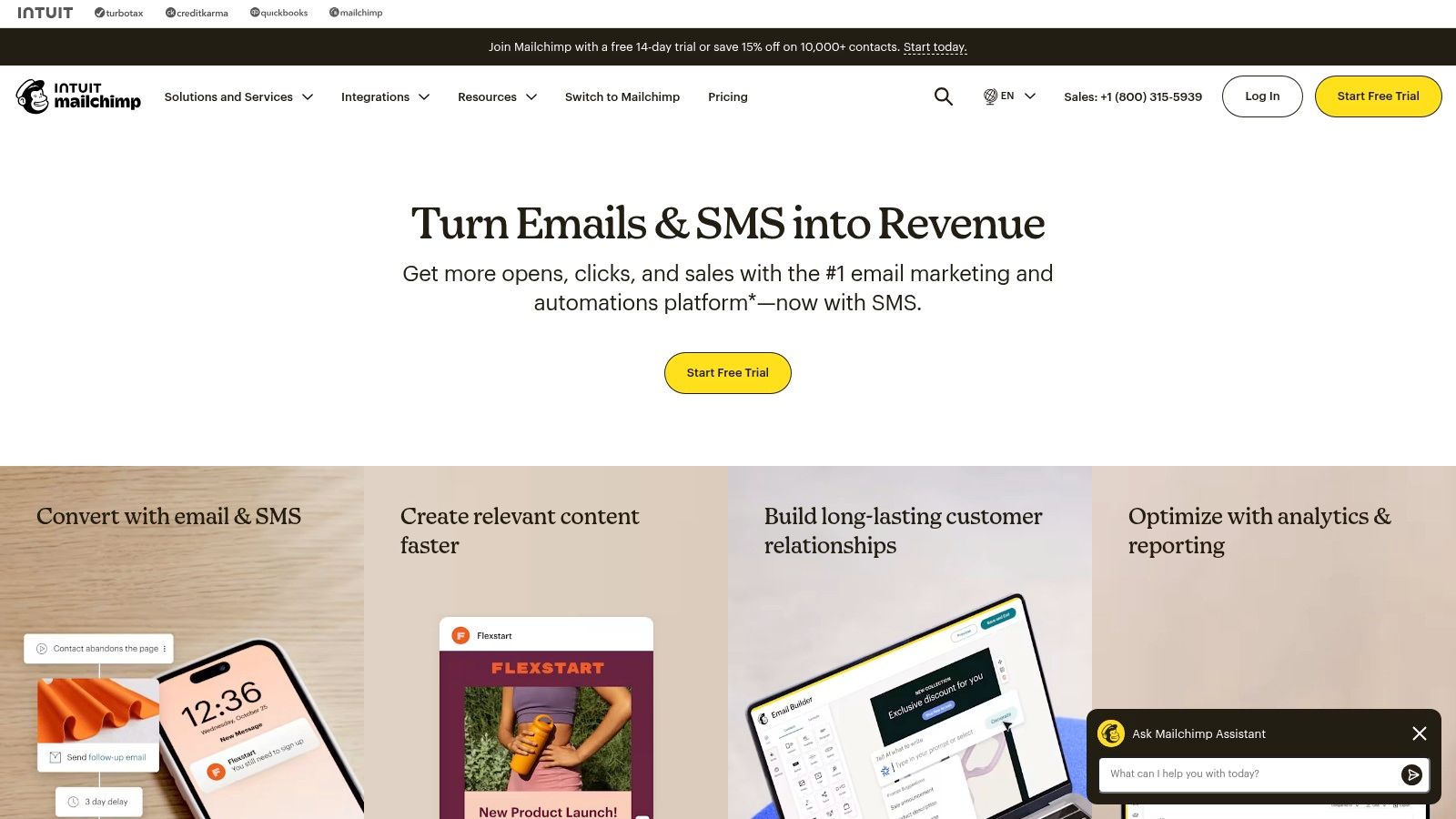
Mailchimp is an email-centric campaign platform renowned for its user-friendly interface, making it an excellent starting point for small to mid-sized businesses. Its strength lies in simplifying core marketing tasks like email automation, audience segmentation, and performance tracking. While it began as an email service, it has expanded to include landing pages, social media ads, and a basic CRM, offering a more integrated solution for teams that don’t yet need enterprise-level complexity. Mailchimp excels as one of the most accessible marketing campaign management tools for organizations prioritizing ease of use and rapid implementation.
Key Features & Use Case
The pre-built journey templates and A/B testing capabilities allow marketers to quickly launch and optimize automated email sequences. A small e-commerce business, for instance, could use a pre-built journey to send a welcome series to new subscribers, test different subject lines for effectiveness, and then follow up with an abandoned cart reminder. Higher-tier plans unlock predictive segmentation tools that can identify which customers are most likely to purchase, enabling more targeted campaigns.
Pricing & Implementation
Mailchimp offers a free plan for up to 500 contacts, with paid plans starting at $13/month. Pricing is primarily based on contact count and send volume, which provides clarity but can lead to overage fees if limits are exceeded. A “Pay As You Go” option is also available for infrequent senders, offering credits for more flexible campaign execution. Implementation is straightforward, requiring minimal technical expertise.
- Pros: Simple onboarding and a large template library, a broad integration ecosystem, and a flexible pay-as-you-go option.
- Cons: Limited advanced analytics and automation compared to enterprise platforms, and potential for high overage fees.
Website: https://mailchimp.com/
3. Salesforce Marketing Cloud
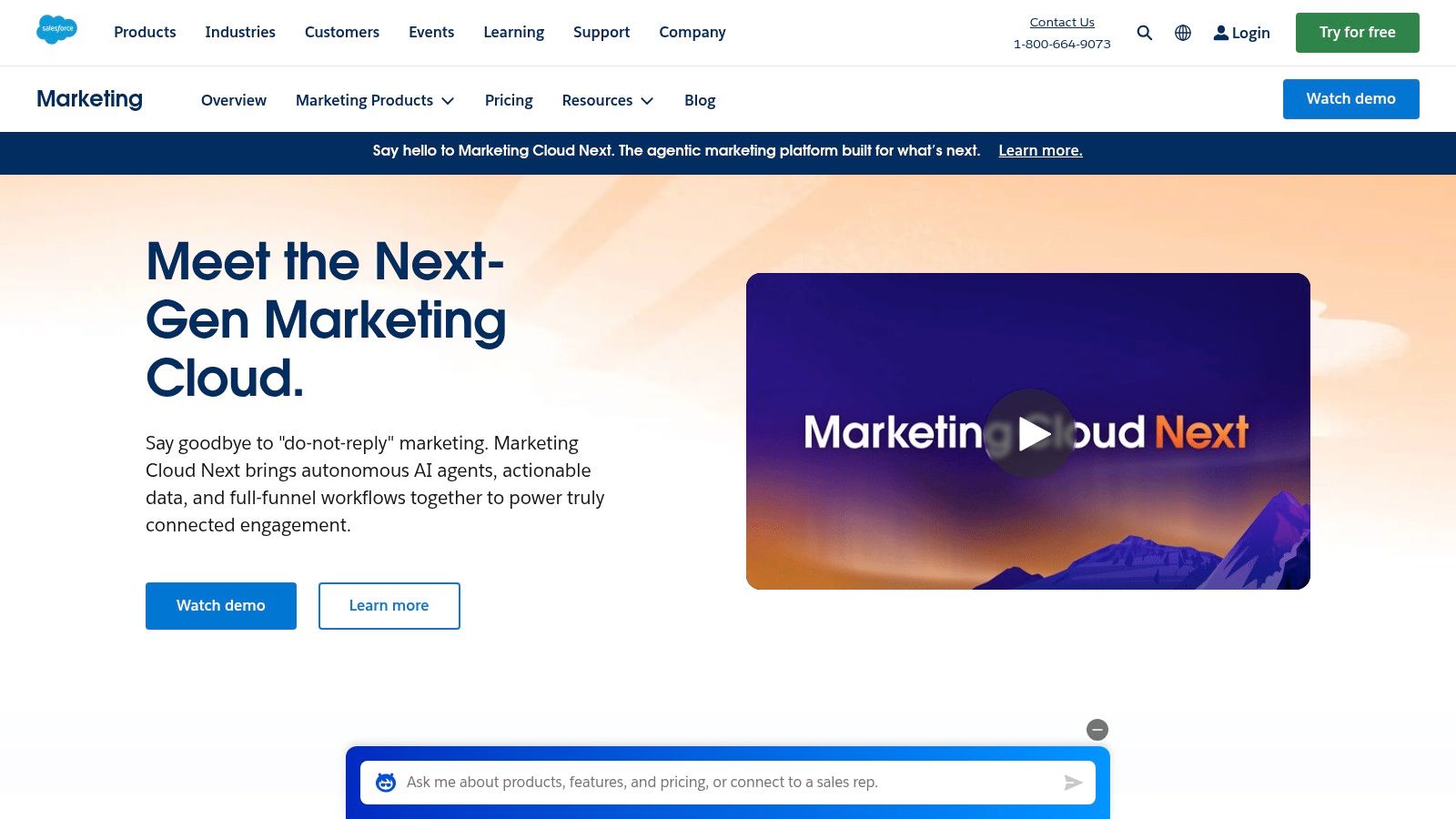
Salesforce Marketing Cloud is an enterprise-grade suite built to orchestrate sophisticated, multi-channel customer journeys at scale. Its primary strength is its native connectivity to the Salesforce Sales Cloud, creating a unified customer record that powers highly personalized interactions across email, mobile, social, and advertising platforms. This deep integration makes it one of the most powerful marketing campaign management tools for large B2B organizations that require robust data governance and a single, comprehensive view of the customer lifecycle.
Key Features & Use Case
The platform’s Journey Builder is a cornerstone feature, allowing marketers to visually map and automate complex, trigger-based customer paths. For instance, a global B2B enterprise could use it to launch a multi-touch nurture journey that sends an initial email, followed by a mobile push notification for a webinar, and finally triggers a retargeting ad on LinkedIn if a key engagement threshold is met. Leveraging its AI capabilities (Einstein) and Data Cloud connectivity provides an even deeper level of predictive personalization. You can find more details in our guide covering marketing automation best practices.
Pricing & Implementation
Salesforce Marketing Cloud is positioned for the enterprise market, with pricing available through custom quotes based on specific modules and usage needs. Implementation is a significant undertaking, often requiring specialized consultants or a dedicated internal team. The platform’s complexity and cost make it less suitable for small businesses or those without mature data strategies.
- Pros: Unmatched scalability for enterprise-level operations, native Salesforce CRM integration, and a powerful partner ecosystem for extended functionality.
- Cons: High price point and significant implementation complexity, with a steep learning curve for new users.
Website: https://www.salesforce.com/marketing/
4. Adobe Marketo Engage
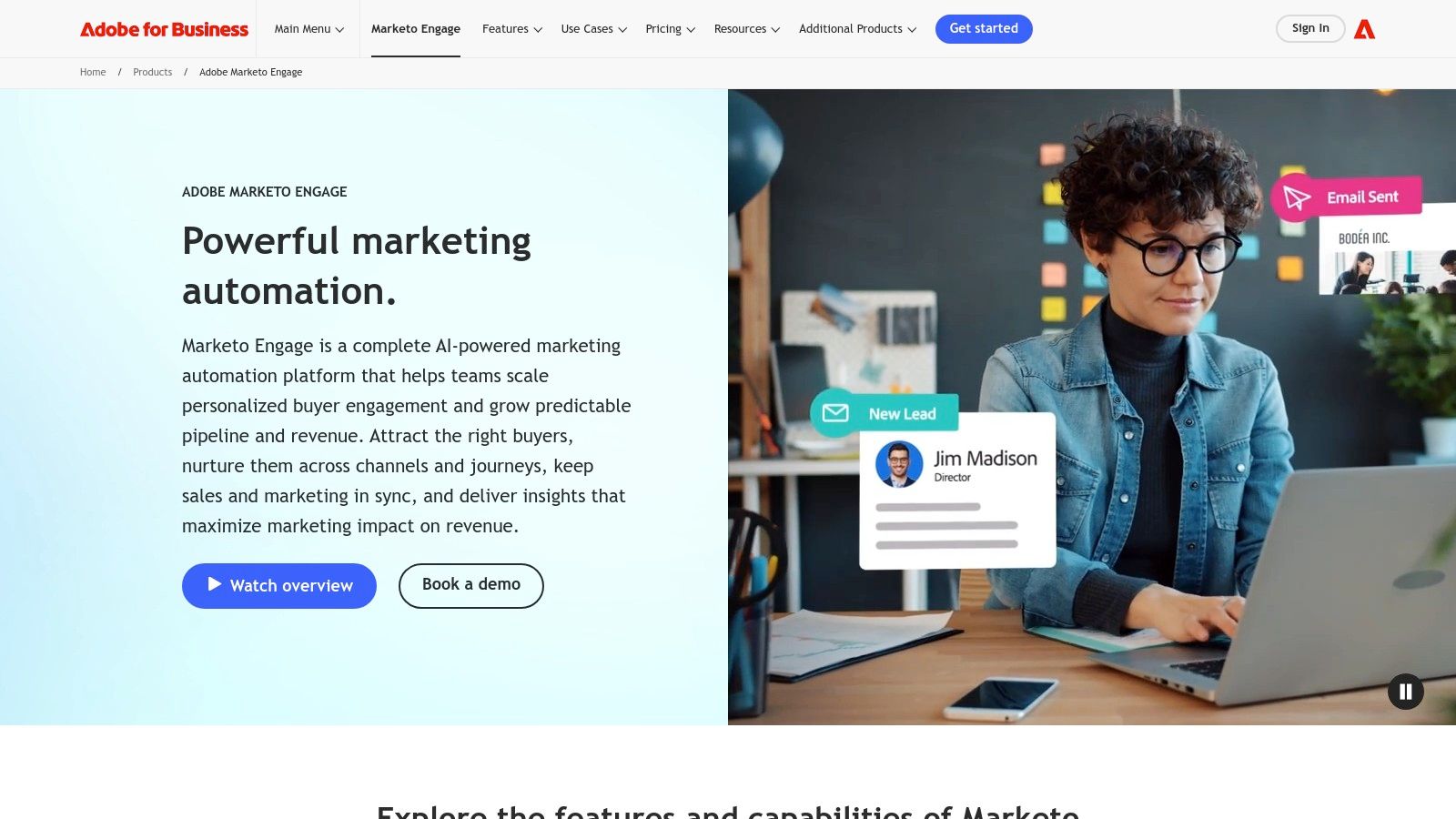
Adobe Marketo Engage is an enterprise-grade marketing automation platform engineered for complex B2B marketing operations. Its primary distinction lies in its deep, granular control over campaign logic, lead management, and multi-channel orchestration, making it a powerful choice for organizations with sophisticated go-to-market strategies. Integrated natively within the Adobe Experience Cloud and offering robust sync capabilities with major CRMs like Salesforce, it serves as a central hub for executing and measuring revenue-driven campaigns. The platform is one of the most comprehensive marketing campaign management tools for teams that require advanced automation and account-based marketing (ABM) functionality.
Key Features & Use Case
Marketo’s “Smart Campaigns” feature allows marketers to build highly specific audience segments and multi-step journey flows with precision. A key use case is for a B2B enterprise running a multi-touch ABM strategy. The marketing team can use Marketo to identify target accounts, trigger personalized ad and email sequences based on engagement, score leads at both the individual and account level, and sync this intelligence with Salesforce to alert sales reps to high-priority opportunities. Its attribution tools, like Marketo Measure, provide deep insights into which channels are driving revenue.
Pricing & Implementation
Marketo Engage utilizes a tiered, quote-based pricing model (Growth, Select, Prime, Ultimate) that depends on database size and feature set. This structure makes it a premium investment, particularly as contact lists grow. The platform’s complexity means implementation often requires specialized expertise or partner support, representing a significant upfront investment in both time and resources.
- Pros: Powerful for complex nurture and ABM use cases, a mature ecosystem with extensive extensibility, and granular control over automation logic.
- Cons: Pricing is quote-based and can be premium as databases scale, and it has a steeper learning curve that may challenge non-specialists.
Website: https://business.adobe.com/products/marketo/adobe-marketo.html
5. Klaviyo
Klaviyo is a powerful, ecommerce-centric platform specializing in email, SMS, and push notification campaigns. Its primary strength lies in deep, real-time integrations with major ecommerce platforms like Shopify, WooCommerce, and BigCommerce, allowing it to pull rich customer data directly from the source. This enables marketers to create highly personalized campaigns based on browsing history, purchase behavior, and even predictive analytics, such as churn risk or lifetime value. For B2B companies with a direct-to-consumer or ecommerce sales motion, Klaviyo is one of the most effective marketing campaign management tools for driving direct, measurable revenue.
Key Features & Use Case
The platform’s standout feature is its advanced segmentation engine combined with pre-built automation flows. A B2B company selling software with a self-service model, for instance, can use Klaviyo to automatically trigger an abandoned cart series that includes an SMS reminder 24 hours after the initial email. The system can segment users who have purchased a specific product tier and exclude them from campaigns promoting those same items, ensuring communication is always relevant. Revenue-based reporting ties every campaign directly to sales figures.
Pricing & Implementation
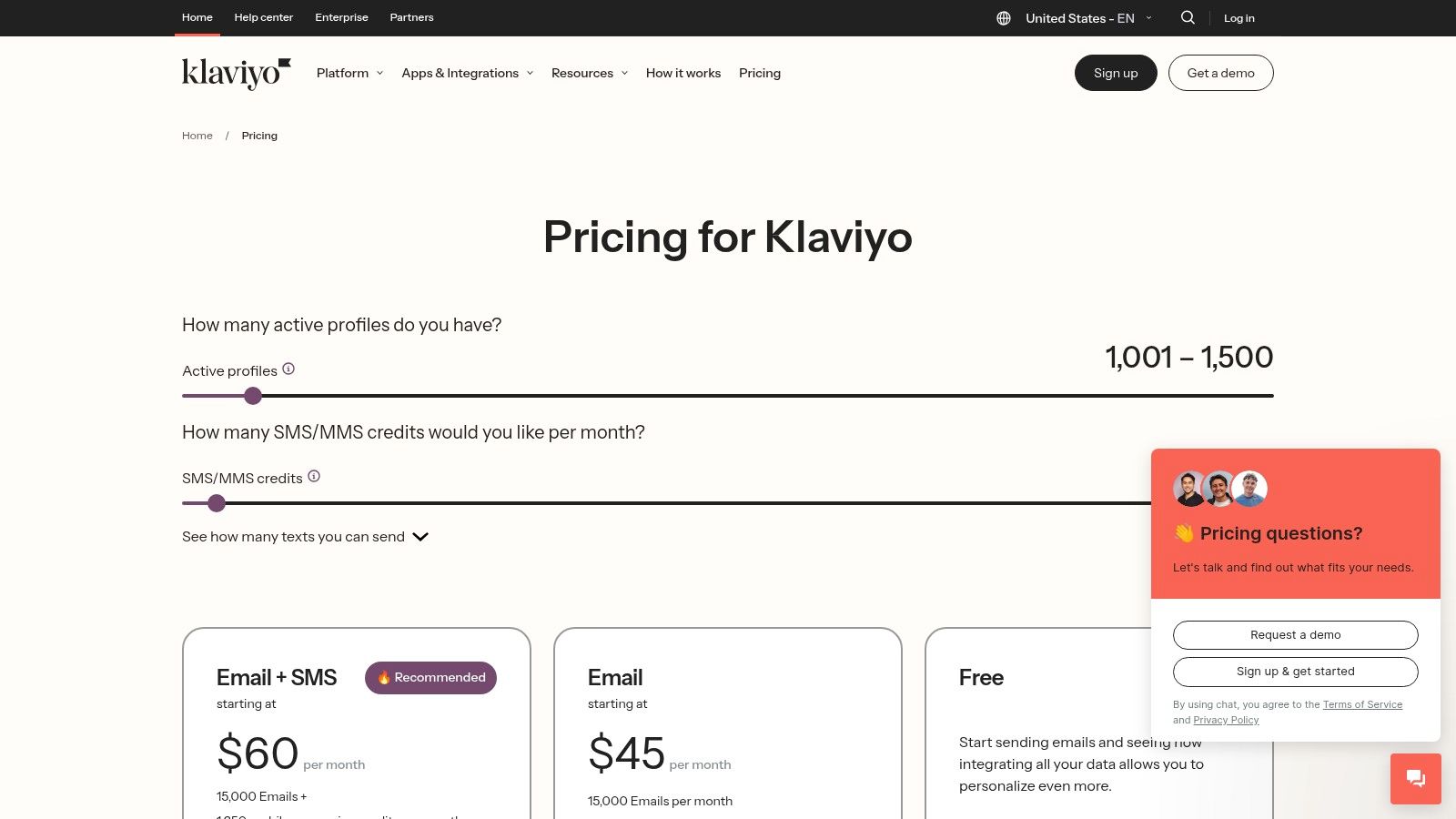
Klaviyo offers a free tier for up to 250 contacts and 500 email sends. Paid plans are based on the number of active profiles and SMS credits needed, with a pricing calculator available on their site for clear cost estimation. While it integrates seamlessly with hundreds of apps, its core functionality is optimized for ecommerce and may feel less aligned for traditional B2B sales cycles.
- Pros: Excellent ecommerce templates and automation workflows, strong ROI tracking tied directly to store revenue, and flexible segmentation with product and event data.
- Cons: Costs increase with the number of active profiles, and it has fewer enterprise governance features compared to top-tier B2B suites.
Website: https://www.klaviyo.com/pricing
6. ActiveCampaign
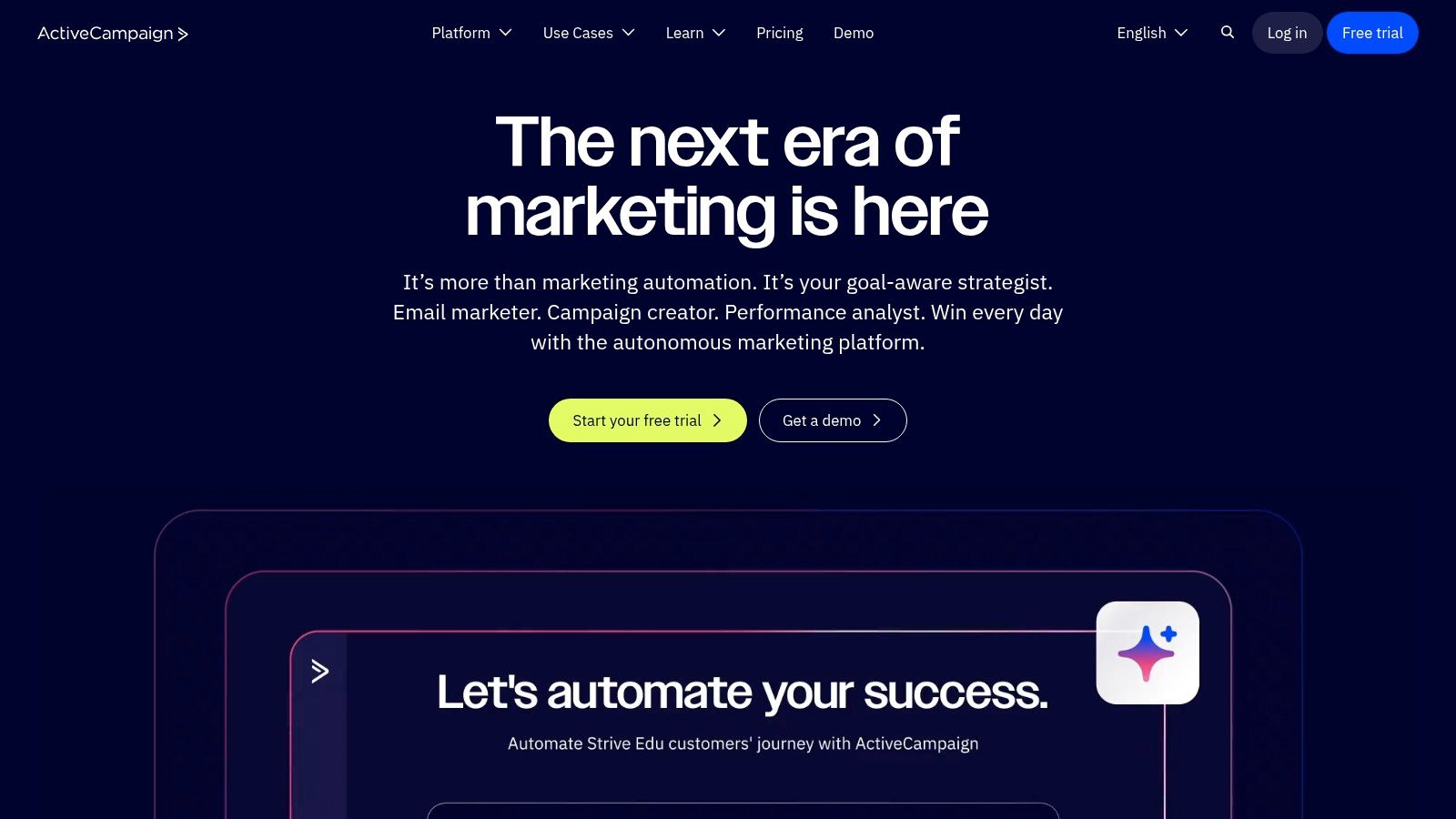
ActiveCampaign provides sophisticated marketing and sales automation for small to mid-sized businesses (SMBs). Its platform combines email marketing, a lightweight CRM, and powerful automation workflows, making it a strong contender for companies that need advanced logic without the enterprise-level price tag. The core value lies in its ability to trigger highly personalized, cross-channel campaigns based on user behavior, such as site visits, email engagement, and custom events. This makes it one of the most versatile marketing campaign management tools for B2B and B2C companies focused on customer lifecycle marketing.
Key Features & Use Case
The visual automation builder is the platform’s centerpiece, allowing for intricate “if/then” logic that rivals more expensive systems. A B2B service company could use it to create a post-demo automation that segments leads based on their expressed interest, sending them targeted follow-up emails with relevant case studies. If a lead engages, the system can add them to a custom LinkedIn audience for retargeting, demonstrating its multichannel capability. This level of granular control over the customer journey is a key differentiator.
Pricing & Implementation
ActiveCampaign offers several tiers starting at $29/month, with pricing scaling based on the number of contacts in your database. Higher-tier plans unlock advanced features like lead scoring, landing pages, SMS marketing, and deeper ecommerce integrations. While there is no mandatory onboarding fee, new users may need time to fully leverage the powerful automation features.
- Pros: Powerful and flexible automation capabilities at a competitive price, strong segmentation and personalization features, and a free trial to test the platform.
- Cons: The contact-based pricing can become expensive as your list grows, and the built-in CRM is less robust than dedicated solutions like Salesforce.
Website: https://www.activecampaign.com/
7. Braze
Braze is an enterprise-grade customer engagement platform built for real-time, cross-channel communication. Its primary strength lies in its speed and scale, particularly for mobile-first brands that need to trigger personalized messages based on immediate user actions. By combining in-app, push, email, SMS, and web campaigns into a single workflow, Braze allows marketing operations teams to orchestrate cohesive customer journeys that respond instantly to user behavior. This makes it one of the most powerful marketing campaign management tools for B2B SaaS organizations focused on deep, real-time product usage engagement at scale.
Key Features & Use Case
The platform’s standout feature is its ability to use sub-second triggers and AI personalization (BrazeAI) for timely, relevant messaging. For example, a B2B SaaS company can use Braze to send an in-app product tour notification moments after a user signs up for a trial. Its catalog data integration allows for dynamic content population, ensuring messages are always current. Additionally, it excels at activating first-party data across paid media channels, unifying the user experience.
Pricing & Implementation
Braze uses a custom pricing model tailored to enterprise needs, which means there is no public pricing available. Implementation can be resource-intensive, often requiring dedicated developer support to integrate its SDK and connect data sources properly. The platform is designed for organizations with the technical capacity to manage a sophisticated MarTech stack.
- Pros: Built for speed and scale with a strong mobile focus, deep data activation capabilities, and an extensive partner network.
- Cons: Enterprise-level pricing can be prohibitive for smaller companies, and implementation requires significant technical resources.
Website: https://www.braze.com/
8. Iterable
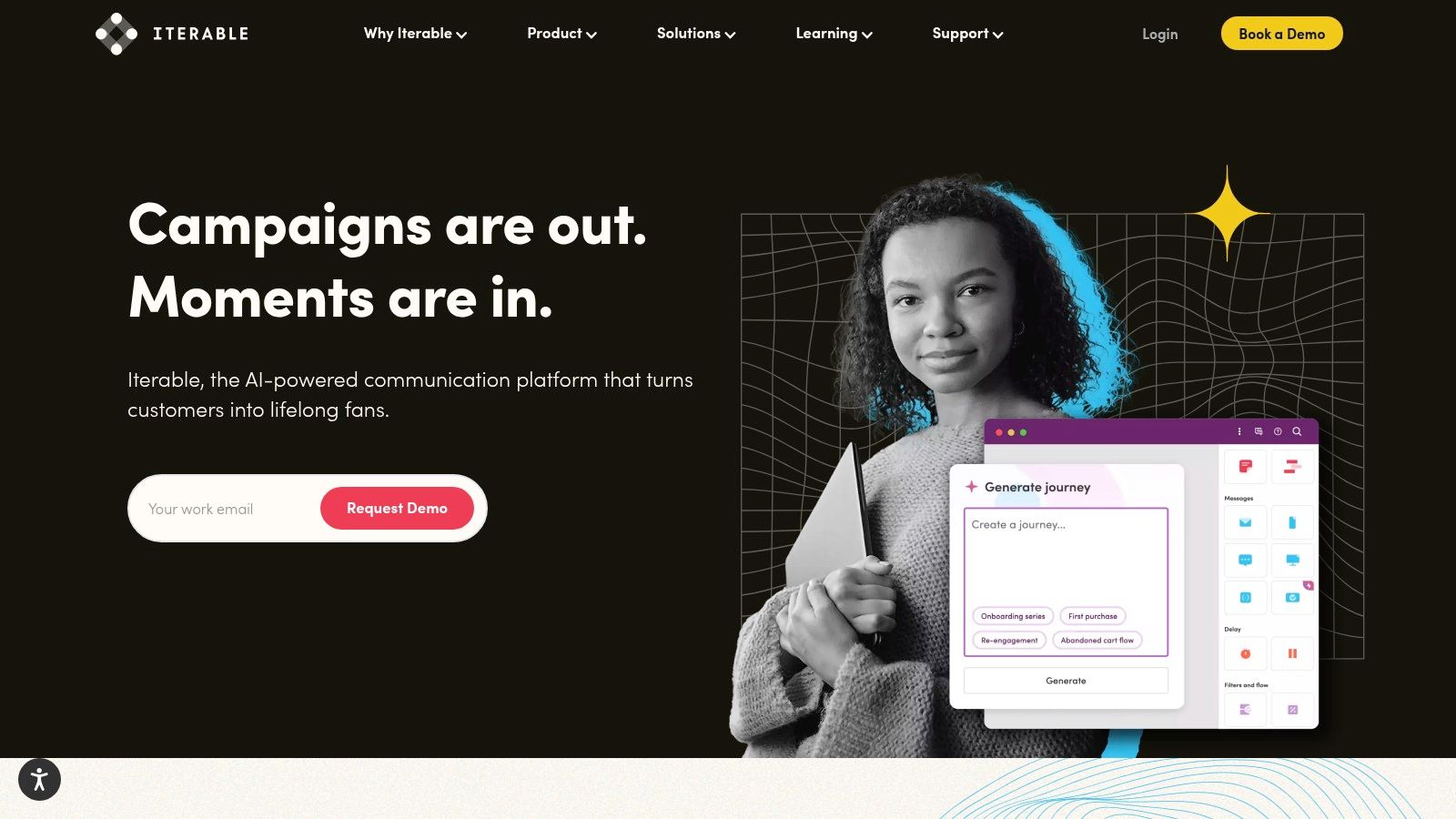
Iterable excels as a cross-channel marketing platform built for powering sophisticated, moment-based customer journeys. Its strength lies in enabling growth and lifecycle marketers to activate customer data across email, SMS, push, in-app, and web channels from a single interface. The platform is designed for real-time personalization, allowing marketing operations teams to orchestrate campaigns that react instantly to user behavior. This makes it one of the most agile marketing campaign management tools for B2C and high-velocity B2B companies focused on customer engagement and retention.
Key Features & Use Case
The platform’s Journey Builder, combined with its flexible data model, is a core differentiator. It empowers marketers to create dynamic, individualized paths for users based on event triggers and segment changes. For instance, a B2B SaaS company could use Iterable to send a push notification with a personalized offer the moment a trial user approaches their usage limit, then follow up via email if they don’t convert, all while syncing that audience to paid channels for retargeting. Its AI-powered features further enhance this by optimizing send times and predicting user churn.
Pricing & Implementation
Iterable does not offer public pricing and operates on a sales-led enterprise contract model. This approach is typical for platforms designed for scale, where pricing is customized based on contact volume, message sends, and feature requirements. Implementation is well-supported, but the platform’s depth means it may be overly complex for teams with basic campaign needs.
- Pros: Strong usability for sophisticated lifecycle programs, flexible data model with extensive integrations (Segment, Snowflake), and well-rated support resources.
- Cons: No public pricing requires a sales consultation, and its true value is realized at scale, which may overwhelm smaller teams.
Website: https://iterable.com/
9. Google Ads
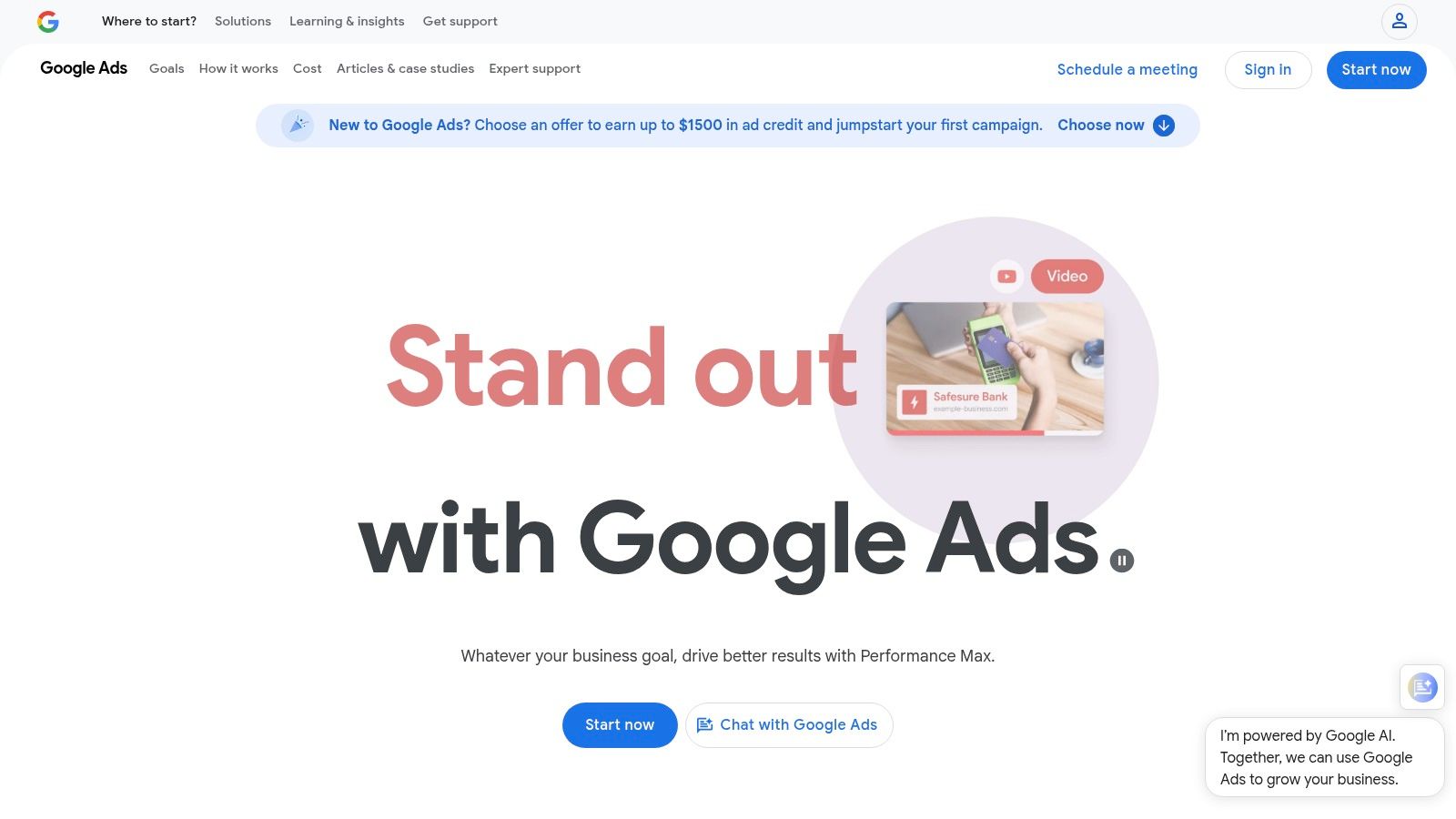
Google Ads is the undisputed leader for paid search and display advertising, offering unparalleled reach across Google’s vast ecosystem. It operates as a direct-response campaign engine, enabling marketers to capture high-intent traffic at the exact moment of search. The platform’s strength lies in its sophisticated auction-based system and granular controls, allowing for precise budget management and performance targeting. For B2B organizations looking to drive lead generation and bottom-of-funnel conversions, it is one of the most powerful marketing campaign management tools available.
Key Features & Use Case
The platform’s core revolves around keyword and audience targeting, coupled with robust bidding strategies (CPC, CPA, CPM). A SaaS company, for example, can run a Search campaign targeting keywords like “B2B CRM software” to attract active buyers, while simultaneously running a YouTube campaign to build brand awareness with a specific professional demographic. Deep integration with Google Analytics provides a closed-loop reporting system for tracking conversions and calculating return on ad spend (ROAS) with precision.
Pricing & Implementation
Google Ads pricing is entirely flexible and auction-based, with no minimum spend. Costs are determined by competition, ad quality (Quality Score), and your chosen bidding strategy. While accessible, achieving profitability often requires significant expertise and continuous optimization, making the learning curve steep for new users.
- Pros: Massive reach with intent-driven traffic, fine-grained budget control and forecasting tools, and a deep measurement ecosystem.
- Cons: Competitive CPCs in many B2B verticals can be high, and it requires ongoing campaign optimization and management expertise.
Website: https://ads.google.com/
10. Meta Ads Manager
Meta Ads Manager is a specialized platform for creating, managing, and optimizing campaigns across Facebook, Instagram, Messenger, and the Audience Network. Its strength lies in its powerful audience-building tools, which allow marketers to leverage vast user data for granular targeting based on demographics, interests, and behaviors. While not an all-in-one solution, it is one of the most essential marketing campaign management tools for B2B companies looking to execute highly targeted paid social campaigns that drive awareness, consideration, and conversion at scale.
Key Features & Use Case
The platform’s core value is its ability to build custom and lookalike audiences. For example, a B2B SaaS company can upload a list of its high-value customers from its Salesforce or HubSpot CRM and use it to create a lookalike audience, reaching new prospects with similar profiles. This functionality, combined with detailed performance analytics and diverse ad formats like video and carousels, enables precise campaign optimization. You can also track offline conversions, connecting ad spend directly to revenue.
Pricing & Implementation
Meta Ads Manager is free to use; advertisers only pay for the ad spend they commit to. Budgets are highly flexible, allowing for daily or lifetime caps, and billing occurs when a set spending threshold is reached. Implementation involves setting up a Meta Business Account and installing the Meta Pixel on your website for conversion tracking, which is crucial for measuring ROI and enabling effective retargeting campaigns.
- Pros: Unparalleled audience reach and targeting capabilities, strong remarketing and lookalike audience features, and highly flexible budgeting.
- Cons: Performance can fluctuate due to auction dynamics and seasonality, and it requires ongoing creative testing to sustain a positive return on ad spend.
Website: https://business.facebook.com/adsmanager
11. monday.com Marketer
monday.com Marketer is a flexible Work Operating System (Work OS) tailored for marketing and creative teams. Its primary strength is in centralizing campaign planning, execution, and tracking within highly visual and customizable boards. Unlike platforms that focus on campaign delivery, monday.com excels at managing the operational workflows behind the scenes, from initial creative briefs to final performance analysis. This makes it an essential tool for marketing operations teams needing to align cross-functional efforts and maintain visibility over complex project timelines.
Key Features & Use Case
A standout feature is the platform’s customizable intake forms, which streamline the process of receiving and managing new project or campaign requests. For example, a marketing operations team can create a form for campaign requests that automatically populates a new task on their campaign calendar board, assigns an owner, and sets a due date. This automation, combined with integrations for tools like Adobe Creative Cloud and Dropbox, creates a connected ecosystem for digital asset management and creative production, supporting an efficient marketing operations team structure.
Pricing & Implementation
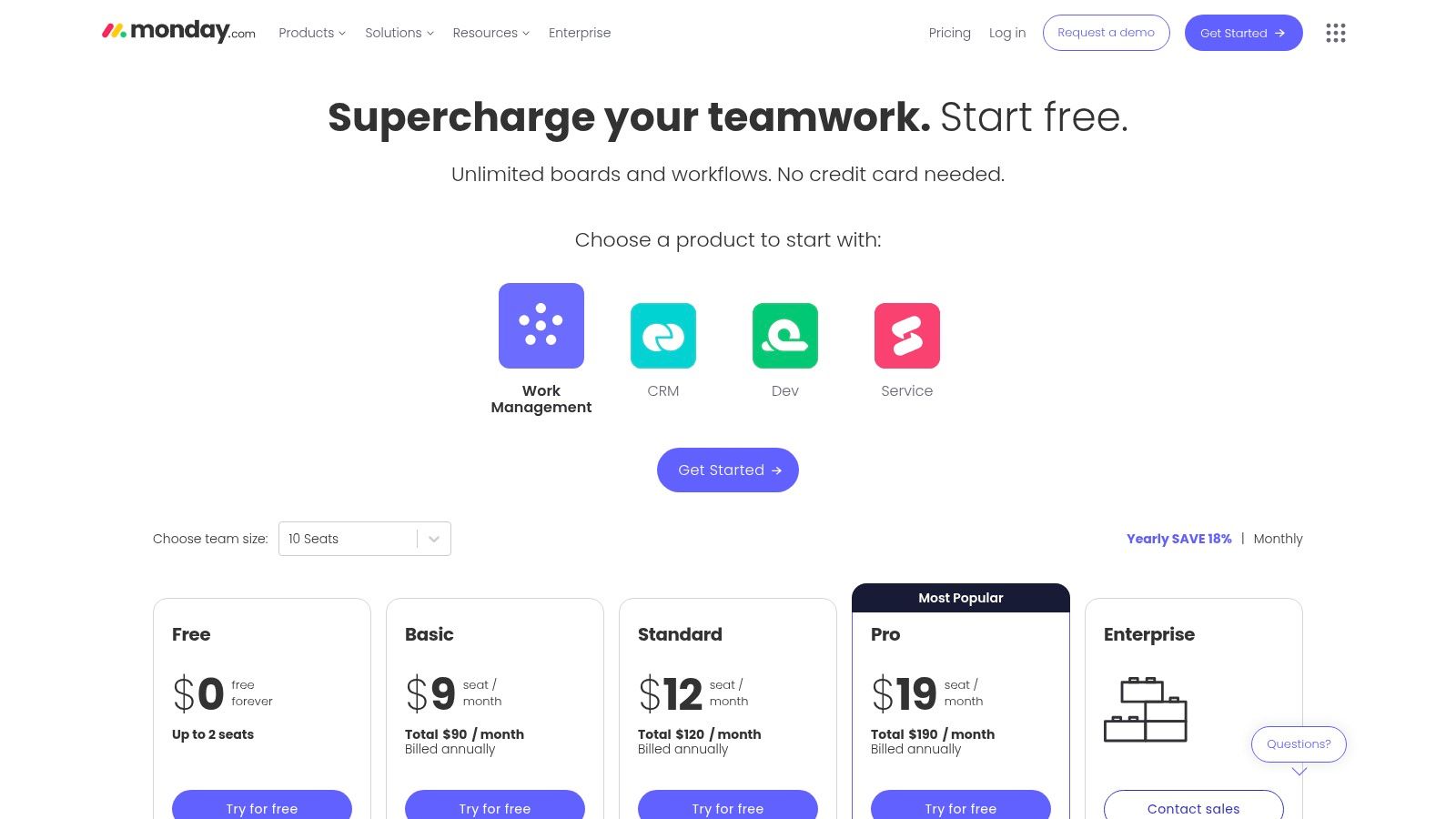
monday.com offers several tiers, including a free plan for individuals. Paid plans start at $9 per seat/month (with a 3-seat minimum). Pricing scales based on the number of users and the feature set required, which can become a significant expense for larger teams. Implementation is generally straightforward due to its intuitive interface, though building complex, automated workflows may require a learning curve.
- Pros: Highly visual and customizable boards, excellent for cross-team collaboration, and scales well from small teams to entire departments.
- Cons: Not a dedicated campaign delivery tool (e.g., for sending emails), and per-seat pricing can add up quickly as the team grows.
Website: https://monday.com/marketing/product-pricing
12. G2 Campaign Software
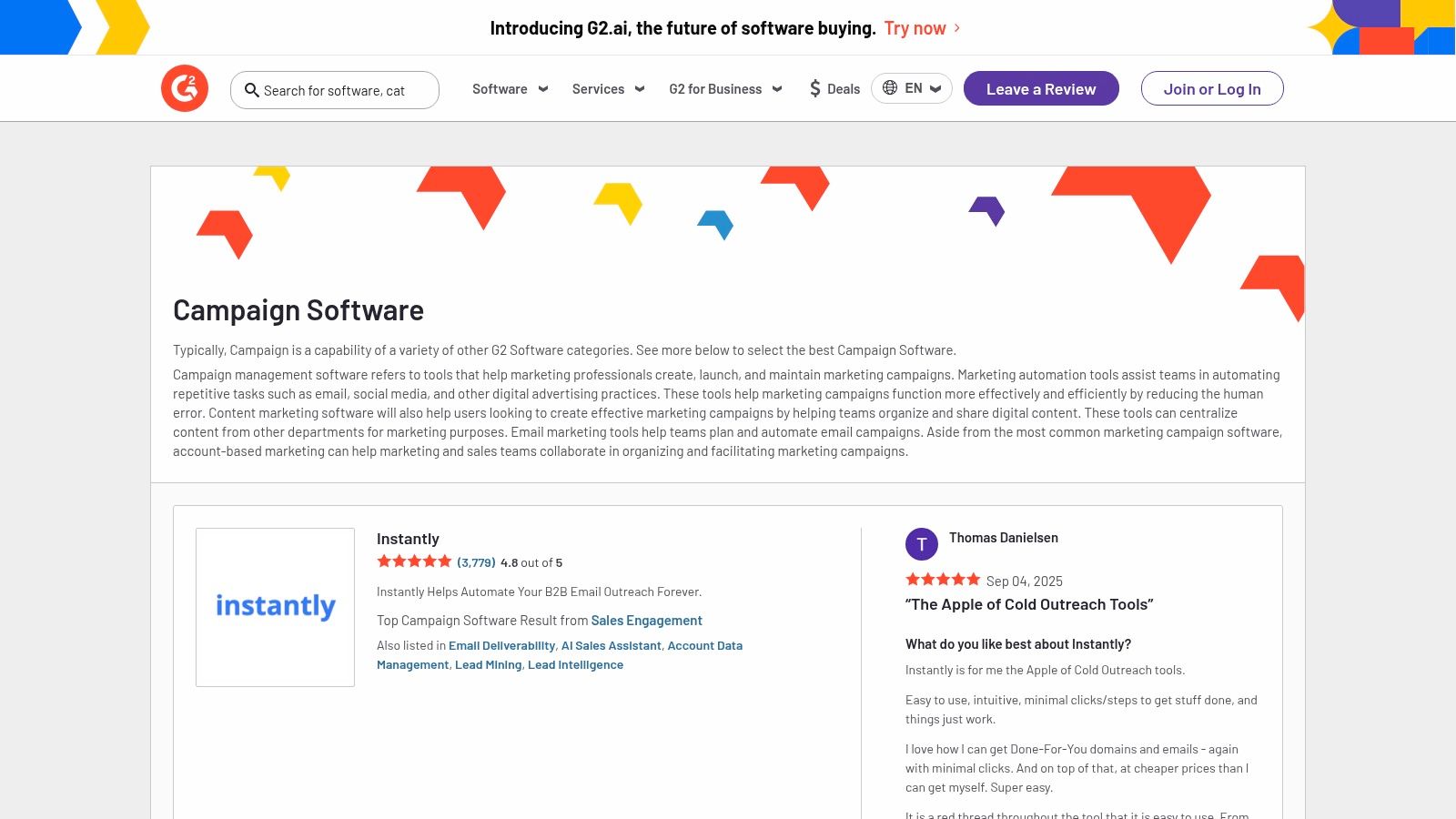
While not a campaign execution platform itself, G2’s Campaigning Software category is an indispensable resource for any team evaluating marketing campaign management tools. It functions as a vendor-agnostic marketplace where marketing operations managers can research, compare, and shortlist potential solutions based on extensive, verified user reviews. The platform aggregates real-world user feedback and presents it alongside detailed feature matrices, providing a transparent view of a tool’s capabilities and performance before committing to a demo or purchase. This makes it a crucial first step in the technology selection process.
Key Features & Use Case
The core value of G2 lies in its aggregated user ratings and comprehensive comparison grids. For instance, a RevOps leader tasked with finding a new automation platform can use filters to identify top-rated tools for B2B mid-market companies, then create a side-by-side comparison of features like lead scoring, A/B testing, and CRM integration. This data-driven approach allows teams to build a highly qualified shortlist, saving significant time and reducing the risk of selecting a tool that doesn’t fit their operational needs.
Pricing & Implementation
G2 is a free resource for software buyers. The platform provides direct links to vendor websites for pricing inquiries, trials, and purchases. While it often includes pricing summary information on product profiles, this data can sometimes be outdated. It’s always best practice to verify costs directly with the vendor, as sponsored placements can also influence the order in which tools are displayed on category pages.
- Pros: Unbiased and verified user reviews provide honest insights, powerful comparison tools help narrow down options, and it is free to use for research.
- Cons: Sponsored placements can affect product visibility, and pricing information may not always be current and requires direct verification.
Website: https://www.g2.com/software/campaigning
Marketing Campaign Tools Comparison Matrix
| Product | Core Features | User Experience / Quality | Value Proposition | Target Audience | Price Points & Scalability |
|---|---|---|---|---|---|
| HubSpot Marketing Hub | Visual workflows, multi-channel campaigns, revenue reports | Fast time-to-value, HubSpot Academy | Scalable pricing, deep CRM integration | SMBs to Enterprises | Free to enterprise, onboarding fees at higher tiers |
| Mailchimp | Email automation, segmentation, landing pages, 300+ integrations | Simple onboarding, large template library | Transparent pricing, pay-as-you-go | Small teams | Tiered pricing, overage fees apply |
| Salesforce Marketing Cloud | Journey builder, AI features, advanced analytics | Robust enterprise features | Enterprise-grade, strong CRM integration | Large enterprises | High cost, complex implementation |
| Adobe Marketo Engage | Lead nurturing, ABM, multi-step journeys, attribution tools | Granular control, mature ecosystem | Powerful for complex B2B/B2C marketing | Enterprise B2B/B2C | Quote-based, premium pricing |
| Klaviyo | Real-time segmentation, email, SMS, push, ecommerce-focused | Strong ROI tracking, ecommerce templates | Ecommerce-centric, flexible segmentation | Ecommerce businesses | Profile-based pricing, costs rise with profiles |
| ActiveCampaign | Visual automation, email, site tracking, SMS, lead scoring | Good deliverability, competitive price | Affordable automation for SMBs | SMBs, D2C teams | Pricing grows with contacts |
| Braze | Real-time triggers, AI personalization, data activation | Built for scale, mobile focus | Enterprise-level speed & personalization | Enterprises | Custom, typically enterprise pricing |
| Iterable | AI-powered journeys, real-time segmentation, integrations | Strong usability for lifecycle | Flexible data model, enterprise tools | Growth/lifecycle marketers | Sales-led, no public pricing |
| Google Ads | Paid search/display/video, bidding models, analytics | Massive reach, detailed budget control | Intent-driven traffic, extensive analytics | All advertisers | Auction pricing, cost varies by competition |
| Meta Ads Manager | Multi-platform ad campaigns, rich creative formats | Broad reach, flexible budgets | Strong targeting/remarketing | Brands of all sizes | Variable, depends on spend |
| monday.com Marketer | Campaign calendars, asset management, automations | Intuitive, customizable boards | Collaboration & workflow management | Marketing & creative teams | Per seat pricing, scales with team size |
| G2 Campaign Software | User reviews, feature matrices, pricing insights | Unbiased comparisons, up-to-date feedback | Helps shortlist and research tools | Buyers evaluating software | Free access, vendor pricing varies |
Making Your Final Decision: Aligning Tools with Strategy
Selecting the right marketing campaign management tools is less about finding a single ‘best’ platform and more about architecting a technology stack that drives your specific revenue goals. Throughout this guide, we have explored a diverse range of solutions, from all-in-one CRM platforms like HubSpot and Salesforce Marketing Cloud to specialized tools like Klaviyo for e-commerce and Braze for mobile-first engagement. The core takeaway is that tool selection must be a strategic exercise, not just a technical one.
Your final decision should be directly tied to your existing operational framework, particularly your CRM. For organizations deeply embedded in the Salesforce ecosystem, a tool like Marketing Cloud Account Engagement (Pardot) or Marketo offers native integration and data continuity. Conversely, companies built on HubSpot will find the most seamless experience within its own Marketing Hub. Ignoring this foundational integration point often leads to data silos, manual workarounds, and a fragmented view of the customer journey, undermining the very efficiency these tools are meant to create.
Key Factors for Your Evaluation
Beyond the primary CRM alignment, several critical factors must guide your choice. Consider these questions as a final checklist before committing to a platform:
- Scalability and Future Needs: Does the tool support your company’s growth trajectory for the next three to five years? Look at contact tier pricing, feature unlocks at higher plans, and the platform’s ability to handle increasing data complexity and campaign volume. A tool that is perfect for today might become a bottleneck tomorrow.
- Team Skillset and Adoption: Who will be using this tool daily? A powerful but complex platform like Marketo requires specialized expertise, while a solution like Mailchimp or monday.com is built for broader accessibility. Underestimating the need for training and internal champions is a common cause of poor ROI.
- Integration and API Capabilities: A marketing campaign management tool does not operate in a vacuum. Evaluate its ability to connect with your entire MarTech stack, including analytics platforms, ad networks like Google and Meta, sales enablement software, and business intelligence tools. Robust API access is crucial for building a truly connected revenue operations engine.
Moving from Selection to Implementation
Once you have made your selection, the real work begins. Successful implementation goes beyond simply turning on the software. It involves meticulous data migration, process re-engineering, and comprehensive team training. This is a critical stage where strategic alignment truly pays off. Planning how the new tool will integrate into your lead lifecycle, MQL-to-SQL handoffs, and reporting dashboards is essential for maximizing its value and achieving a measurable impact on revenue.
Ultimately, the most effective marketing campaign management tools are those that become an invisible, seamless extension of your strategy. They empower your team to execute complex, multi-channel campaigns efficiently while providing the clear, actionable data needed to optimize performance and drive predictable growth. Choose wisely, implement thoughtfully, and you will build a powerful engine for your go-to-market success.
Navigating the complexities of MarTech selection and implementation can be daunting. At MarTech Do, we specialize in helping B2B organizations audit their existing systems, select the right tools for their unique needs, and manage seamless integrations with platforms like Salesforce and HubSpot. If you need expert guidance to ensure your technology investments translate directly into revenue, visit MarTech Do to learn how we can help optimize your RevOps strategy.