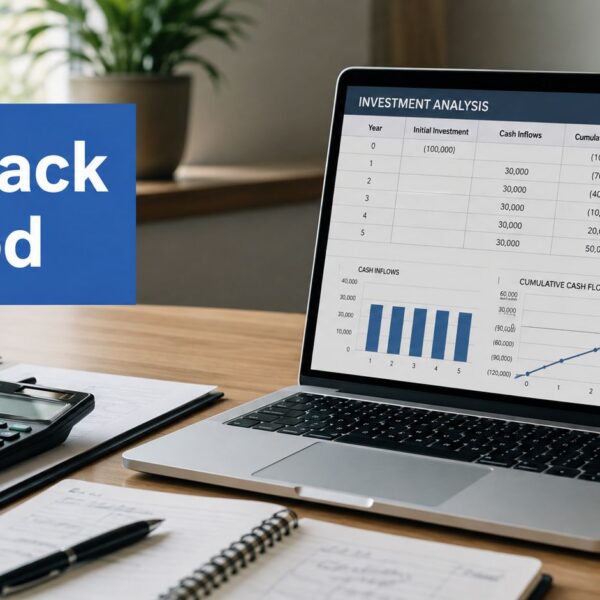

Demonstrating the return on investment (ROI) for marketing automation boils down to one critical question: is this platform driving business growth? The conversation must evolve beyond vanity metrics like open rates and focus squarely on revenue, operational efficiency, and data integrity. This guide will show you how to prove your MarTech stack is not just a budget line item, but a core engine for scalable growth.
Beyond Clicks and Opens: The True Value of Automation

To accurately measure marketing automation ROI, you must redefine what "return" means for your business. For too long, marketing teams have focused on top-of-funnel metrics that fail to resonate with the C-suite. While clicks and opens provide some insight, they don't articulate the full business impact.
A modern, RevOps-focused approach requires a wider lens. The strategic power of platforms like HubSpot, Marketing Cloud Account Engagement (MCAE, formerly Pardot), or Salesforce Marketing Cloud lies in their ability to influence the entire customer lifecycle. We must shift from measuring activities to measuring outcomes.
Direct Financial Gains
This is the most straightforward component of ROI—the revenue your automation platform directly helps generate. For RevOps and marketing operations managers, this is the primary area of focus. We are looking for quantifiable results that directly impact the bottom line.
Key financial metrics to track include:
- Increased Qualified Lead Generation: Measure the volume of new, qualified leads entering the pipeline from automated campaigns.
- Higher MQL-to-SQL Conversion Rates: Quantify the effectiveness of nurture streams in converting marketing-qualified leads into sales-ready opportunities.
- Larger Deal Sizes: Analyze whether automated upsell and cross-sell campaigns are increasing the average contract value (ACV).
- Shortened Sales Cycles: Track the time-to-close for leads engaged by automation. Timely, relevant follow-ups should accelerate this process significantly.
The Power of Indirect Benefits
Equally critical are the indirect—or "soft"—benefits that drive long-term value by improving the efficiency and intelligence of your entire go-to-market engine. While more challenging to quantify, these operational gains are an essential piece of the ROI marketing automation puzzle.
The real value of marketing automation isn't just speed; it's the creation of smarter, scalable processes. Optimizing operations frees up your team for high-impact strategic work, which delivers compounding returns.
The data supports this. A recent report on marketing automation statistics highlights significant efficiency gains: 22% of marketers saw efficiency increases over 35%, and another 39% reported gains between 15% and 35%.
Beyond speed, automation enhances strategy. A notable 27% of B2B marketers strongly agree that automation simplifies the creation of effective customer journeys, demonstrating its impact on strategic execution.
Establishing Your Core ROI Metrics

Before calculating the ROI for marketing automation, you must define what to measure. This fundamental step is often overlooked. An accurate analysis depends on clean CRM data and a consensus on the key performance indicators (KPIs) that truly matter to the business.
We must build a scorecard that draws a direct line from automation efforts to revenue generation. This requires tracking performance across the entire funnel, from initial investment to closed deals. As you define your metrics, it's crucial to understand key distinctions, such as when to focus on ROI vs ROAS and which metric truly drives business growth.
Establishing this framework ensures that all stakeholders, from marketing operations to the CFO, are aligned and speaking the same language.
Identifying Actionable Funnel Metrics
To gain a holistic view, select metrics that narrate the story of each stage in the buyer's journey. These should be KPIs that can be reliably and consistently extracted from your Salesforce or HubSpot instance, focusing on practical, reportable data.
Let's map them across the funnel:
-
Top of Funnel (Awareness & Acquisition): Focus on the efficiency of attracting new prospects.
- Cost Per Lead (CPL): Total campaign spend divided by the number of new leads generated. This metric quantifies the cost of initial lead acquisition.
- Marketing Qualified Lead (MQL) Volume: The total count of leads meeting predefined qualification criteria, indicating the health of your inbound engine.
-
Middle of Funnel (Nurturing & Qualification): Measure how effectively automation moves leads toward sales engagement.
- MQL-to-SQL Conversion Rate: The percentage of MQLs that sales accepts as sales-qualified opportunities. This is a critical indicator of lead quality and sales-marketing alignment.
- Lead Velocity Rate (LVR): The month-over-month growth in qualified leads. A strong LVR signals a healthy, scalable pipeline and predicts future growth.
-
Bottom of Funnel (Conversion & Revenue): Connect automation activities directly to closed business.
- Customer Acquisition Cost (CAC): The total sales and marketing cost required to acquire a new customer. Automation should drive this cost down over time.
- Sales Cycle Length: The average time from a prospect's first touchpoint to a closed-won deal. Effective nurture campaigns and lead scoring are designed to shorten this cycle.
A well-configured marketing automation platform doesn't just generate leads; it manufactures qualified pipeline. Your core metrics should reflect this, shifting the focus from "how many" to "how valuable" and "how fast."
Essential Marketing Automation ROI Metrics
This table serves as a practical guide for building your primary ROI dashboard, breaking down the essential metrics for each funnel stage.
| Funnel Stage | Core Metric | Calculation Formula | Strategic Importance |
|---|---|---|---|
| Top of Funnel (Awareness) | Cost Per Lead (CPL) | Total Campaign Spend / # of New Leads | Measures the raw efficiency of lead generation efforts and initial acquisition costs. |
| Top of Funnel (Awareness) | MQL Volume | Total # of Leads Meeting MQL Criteria | Indicates the overall health and volume of your inbound marketing engine. |
| Middle of Funnel (Nurturing) | MQL-to-SQL Conversion Rate | (Total SQLs / Total MQLs) * 100 | The single best indicator of lead quality and alignment between marketing and sales teams. |
| Middle of Funnel (Nurturing) | Lead Velocity Rate (LVR) | ((Current Month's SQLs – Last Month's SQLs) / Last Month's SQLs) * 100 | Shows the growth rate of your qualified pipeline, predicting future revenue potential. |
| Bottom of Funnel (Conversion) | Customer Acquisition Cost (CAC) | Total Sales & Marketing Costs / # of New Customers | Reveals the total investment required to win a customer, a key indicator of profitability. |
| Bottom of Funnel (Conversion) | Sales Cycle Length | Average # of Days from First Touch to Closed-Won | Effective automation should shorten this, accelerating revenue recognition and improving cash flow. |
Tracking these metrics provides a 360-degree view, moving beyond simple lead counts to a comprehensive understanding of business impact.
The Powerhouse Metric: Email Automation ROI
To demonstrate the immediate impact of marketing automation, focus on email. While only one channel, its return is exceptionally high and easily trackable within platforms like HubSpot or MCAE (Pardot).
According to Mordor Intelligence, email marketing accounted for 27.9% of global marketing revenue in 2024.
Even more compelling, email marketing automation delivers an average return of $36 for every $1 spent—an astounding 3,600% ROI. This massive return is driven by the platform's ability to automate follow-ups, deliver personalized drip campaigns, and nurture leads at a scale impossible to manage manually. By isolating the performance of automated email sequences, you can build an undeniable business case for your investment.
Calculating Your Marketing Automation ROI
Quantifying your marketing automation ROI uses the classic formula: (Gain from Investment – Cost of Investment) / Cost of Investment.
The challenge for RevOps and marketing leaders isn't the math; it's accurately defining "Gain" and "Cost" for a sophisticated platform like MCAE (Pardot) or HubSpot.
A credible calculation requires a comprehensive view of both the revenue generated and the total investment made. This extends far beyond the monthly software subscription.
Defining "Gain" in a RevOps Context
The "Gain" side of the equation represents the total value your marketing automation platform delivers. To capture the true ROI, you must account for all the ways automation fuels your go-to-market engine.
Your primary gains typically fall into three categories:
- Direct Attributable Revenue: Using campaign influence models within your CRM (e.g., Salesforce), you can directly link closed-won deals to specific automated nurture streams or lead scoring initiatives. This is the new revenue you can confidently attribute to automation.
- Increased Sales Productivity: When sales reps receive high-quality, well-nurtured leads, they spend less time on low-value prospecting and more time closing deals. If automation saves each of your 10 reps just five hours per week, you have reclaimed 50 hours of high-value selling time weekly.
- Improved Lead Velocity: By automating follow-ups and delivering timely content, you accelerate the buyer's journey. A shorter sales cycle means you recognize revenue faster, which has a tangible impact on cash flow and forecasting.
Uncovering the True “Cost” of Your Investment
This is where most ROI calculations falter. "Cost" is not merely the software license fee. For a figure that withstands executive scrutiny, you must calculate the total cost of ownership (TCO).
A common mistake in ROI calculations is overlooking implementation, training, and ongoing management costs. Your platform is a living system that requires continuous investment to deliver value.
To calculate your true cost, include these components:
- Software Licensing Fees: Your annual or monthly subscription costs.
- Implementation & Integration Costs: Fees paid to an agency or consultant for initial setup and system integration.
- Team Training & Onboarding: The cost of time and resources spent enabling your team on the platform.
- Ongoing Administration & Management: The allocated salary cost of the marketing operations professional responsible for system optimization.
- Content Creation: The resources required to build the emails, landing pages, and assets that fuel your automation strategies.
Industry data underscores the importance of this investment. It is projected that by 2025, 80% of all B2B sales interactions will occur via digital channels. AI-powered automation can boost ROI by 10-20% and reduce human error by approximately 20%, freeing sales teams to focus on strategic, revenue-generating activities.
A Practical B2B Scenario Using MCAE (Pardot)
Let's model a realistic example for a mid-sized B2B tech company over one year.
Annual Costs:
- MCAE (Pardot) License: $48,000
- Implementation & Training (Agency): $15,000
- Admin Salary Allocation (25% of one MOPs salary): $25,000
- Content & Campaign Creation: $12,000
- Total Annual Cost: $100,000
Annual Gains:
- Attributable Revenue (from MCAE-influenced Opportunities): $250,000
- Sales Productivity Gain (Value of time saved): $60,000
- Value from Shorter Sales Cycle (Accelerated revenue recognition): $40,000
- Total Annual Gain: $350,000
Now, apply the ROI formula:( $350,000 - $100,000 ) / $100,000 = 2.5
To express this as a percentage, multiply by 100. The result is a 250% ROI.
This detailed, component-based approach provides a defensible and realistic figure to present to leadership. For a deeper analysis of these principles, explore our comprehensive guide on how to measure marketing ROI.
Building Actionable ROI Dashboards in Your CRM

Calculating your marketing automation ROI is the first step; operationalizing that data is what drives strategic decisions. Data confined to a spreadsheet has limited value. To demonstrate marketing’s impact and steer the business effectively, you must visualize this information within your CRM.
A well-designed dashboard in Salesforce or HubSpot serves as the single source of truth for your entire go-to-market team. It is a dynamic command center that reveals trends, highlights successes, and flags potential issues in real time.
The objective is to create a single pane of glass where leadership can instantly see how marketing automation impacts the bottom line, building trust and securing budget for future initiatives.
From Metrics to Visualizations: What to Build First
Before opening your CRM's report builder, develop a strategic plan. An effective dashboard tells a clear story, guiding the viewer from top-of-funnel activities to bottom-of-funnel revenue. For marketing and revenue operations, this narrative must explicitly connect marketing actions to sales outcomes.
Here are the essential reports to include in a comprehensive marketing automation ROI dashboard:
- Campaign Influence on Pipeline: In Salesforce, this is critical. Visualize which automated campaigns are touching open opportunities and, more importantly, influencing closed-won deals.
- MQL-to-SQL Conversion Rate by Source: This report isolates lead quality, revealing which channels deliver leads that the sales team values and converts.
- Sales Cycle Duration by Campaign: Answer the question: does automation accelerate deal closure? Compare the sales cycle length for leads that engaged with a nurture track versus those that did not.
- LTV-to-CAC Ratio (Customer Lifetime Value to Customer Acquisition Cost): A more advanced but powerful metric that demonstrates the long-term profitability of the customers you are acquiring.
Of course, none of this is possible without a seamless https://martechdo.com/crm-and-marketing-automation-integration/. The integrity of your data flow is the foundation of all accurate reporting.
Configuring Your Dashboard in Salesforce and HubSpot
With your core reports built, assemble them into a logical dashboard. Both Salesforce and HubSpot offer intuitive, drag-and-drop dashboard builders. The key to success lies not in the tool, but in the strategic organization of information.
Structure your dashboard to mirror the sales and marketing funnel:
- Top Row (Lead Generation): Display high-level metrics like MQL Volume by Source and Cost Per MQL.
- Middle Row (Pipeline & Velocity): Feature your MQL-to-SQL Conversion Rate and Sales Cycle Duration charts.
- Bottom Row (Revenue Impact): Conclude with the most critical metrics: Campaign-Influenced Revenue and the LTV-to-CAC ratio.
The best dashboards are not data dumps; they are curated narratives. Each component should answer a specific business question and contribute to the overarching story of marketing's impact on revenue.
By visualizing these data points together, you create a comprehensive view that instantly connects marketing activities to sales achievements.
Making Your Dashboard a Central Hub for Decision-Making
A dashboard is only useful if it is used. Integrate it into your team's operational rhythm to ensure its adoption and impact.
Schedule regular reviews: weekly with the marketing team, bi-weekly with sales leadership, and monthly or quarterly with the executive team. Use the dashboard as the focal point for these discussions.
Encourage data-driven inquiry. A drop in MQL-to-SQL rates for a specific campaign should trigger an investigation. If one nurture stream consistently shortens the sales cycle, that success should be analyzed and replicated.
When your ROI dashboard becomes a central part of your operational cadence, it transforms the conversation from "What did marketing do last month?" to "How is marketing driving the business forward?" That shift represents the ultimate return on your investment.
Proven Strategies to Maximize Your Automation ROI
Measuring ROI is foundational; actively improving it is where strategic value is created. For marketing operations professionals managing platforms like HubSpot or Salesforce MCAE, tracking is not enough. You must proactively implement advanced techniques to drive compounding value.
By optimizing lead scoring, personalization, and testing protocols, your automation platform evolves from a simple email tool into a sophisticated revenue engine.
Refine Your Lead Scoring Model
A dynamic, multi-layered lead scoring model is a game-changer for maximizing roi marketing automation. Move beyond basic point systems by incorporating behavioral, firmographic, and negative scoring criteria.
- Behavioral Scoring: Assign higher scores for high-intent actions, such as viewing a pricing page or requesting a demo, compared to top-of-funnel content downloads.
- Firmographic Data: Use data enrichment to automatically score leads based on their fit with your ideal customer profile (ICP), such as company size, industry, or revenue.
- Negative Scoring: Deduct points for red flags like visits to a careers page, student email domains, or prolonged inactivity to maintain lead quality.
For example, configure automation rules in MCAE (Pardot) to adjust a prospect's score based on specific page views. This ensures sales reps focus their time on leads demonstrating genuine buying signals, directly boosting efficiency and conversion rates.
Implement Dynamic Content and Personalization
Personalization drives engagement. Automated email campaigns can generate a 320% higher ROI than non-automated ones, largely due to the ability to deliver relevant content at scale. Dynamic content elevates this by tailoring specific sections of an email or landing page based on prospect data.
In your monthly newsletter, use dynamic content in HubSpot to display a manufacturing case study to leads in that industry, while showing a financial services case study to prospects in that sector—all within a single campaign.
True personalization extends beyond using a
{{first.name}}token. It is about delivering the right message, to the right person, at the right moment. A well-configured automation platform provides a significant competitive advantage here.
To execute this effectively, you must understand all customer touchpoints. A guide on B2B customer journey mapping that actually drives revenue can help align your automation efforts with customer needs.
A/B Test Your Nurture Streams Relentlessly
Your nurture streams are the workhorses of your automation strategy. A "set it and forget it" approach leaves revenue on the table. Move beyond simple subject line tests to experiment with more strategic campaign elements.
- Cadence and Timing: Test the optimal time gap between emails (e.g., 3 days vs. 5 days) to see what resonates with your audience.
- Content and Offers: A/B test different offers at various funnel stages. Does a webinar invitation outperform a whitepaper download for mid-funnel leads?
- Sender Personalization: Test sending from a generic marketing alias versus a specific individual, such as a sales director or product specialist.
In Marketing Cloud Account Engagement, you can build two distinct paths within an Engagement Studio program to test which journey produces more qualified leads over time. These incremental improvements accumulate into significant ROI gains.
Conduct Regular System Audits
Regularly auditing your marketing automation system is one of the most effective ways to protect your ROI. Over time, platforms can become cluttered with outdated assets, inefficient workflows, and broken processes that degrade performance.
A system audit is a proactive health check. For a complete playbook, consult guides on marketing automation best practices that detail what to examine.
Focus your audit on these key areas:
- Workflow Efficiency: Identify redundant or conflicting automation rules.
- Data Hygiene: Purge inactive or unmailable contacts that increase costs and reduce deliverability.
- Asset Performance: Archive or remove low-performing emails, landing pages, and forms.
- Integration Health: Verify that your CRM sync is functioning correctly without errors.
By maintaining a clean and efficient platform, you enhance the effectiveness of all other strategies and ensure your investment continues to deliver maximum value.
Common Questions About Marketing Automation ROI
RevOps and marketing leaders frequently encounter the same challenges when justifying their automation platform investment. Calculating the ROI for marketing automation requires a deep understanding of your business, sales cycle, and technology stack.
Here are answers to some of the most common questions.
How Soon Can I Expect to See a Positive ROI?
The timeline to a positive ROI is primarily determined by the length of your sales cycle.
For most B2B companies with a three-to-six-month sales cycle, a positive return can realistically be expected within nine to twelve months.
The initial months are an investment period focused on implementation, CRM integration, and building foundational campaigns and scoring models. However, you can identify early indicators of success within the first six months. Look for improvements in MQL quality, higher engagement rates, and positive feedback from sales reps. The financial ROI accelerates once optimized campaigns begin to shorten sales cycles and can be directly attributed to closed-won deals.
What Are the Biggest Hidden Costs of Marketing Automation?
Focusing solely on the software license fee is a common mistake that undermines the credibility of your ROI calculation. The total cost of ownership (TCO) is always higher.
To calculate an accurate figure, account for these additional costs:
- Implementation and Integration: The initial cost of configuring the platform and connecting it to your CRM (like Salesforce or HubSpot), including any custom development.
- Team Training and Onboarding: The investment in formal training and the internal time required for your team to achieve proficiency.
- Ongoing Content Creation: The cost of producing the emails, landing pages, ebooks, and webinars that fuel your automation engine.
- Platform Administration and Management: The portion of a marketing operations professional's salary dedicated to maintaining, managing, and optimizing the system.
How Do I Attribute Revenue to Specific Automation Campaigns?
Accurate revenue attribution is essential for a credible ROI marketing automation report. For complex B2B sales, simple first-touch or last-touch models are insufficient.
A multi-touch attribution model is the most appropriate approach. In Salesforce, Campaign Influence reports are invaluable. This feature allows you to assign partial revenue credit to multiple marketing touchpoints that influenced an opportunity before it closed.
For example, you might assign 30% credit to the initial lead source, 40% to a mid-funnel demo request campaign, and the final 30% to a late-stage nurture sequence.
The most critical step is to define your attribution model before you begin measuring. Consistency in your model is what makes your ROI data trustworthy and, more importantly, actionable.
Ready to stop guessing and start proving the value of your marketing technology? The experts at MarTech Do specialize in system audits and RevOps implementation for Salesforce and HubSpot ecosystems. We help B2B companies build the dashboards and processes needed to measure and maximize their ROI. Schedule a consultation with MarTech Do today.