Let’s clarify one thing: Salesforce Pardot is now officially called Marketing Cloud Account Engagement (MCAE), but for marketing and sales operations professionals who rely on it daily, it’s still Pardot. At its core, it’s a B2B marketing automation platform engineered to align marketing and sales teams to drive predictable revenue.
Pardot excels in managing the long, complex sales cycles typical in B2B. It automates the heavy lifting of lead nurturing and scoring, providing a clear, actionable view of prospect engagement. For any B2B company using Salesforce, it’s the engine that connects every marketing touchpoint directly to a sales outcome.
Why Pardot Is a B2B RevOps Powerhouse
In the B2B landscape, the disconnect between marketing and sales is more than an operational challenge—it’s a direct drain on revenue. Marketing generates leads, only for sales to deem them unqualified. This classic friction creates inefficiency, wastes budget, and stalls pipeline velocity.
This is precisely the problem Salesforce Pardot was built to solve. Think of it as the central nervous system for your entire go-to-market strategy. It moves beyond simple email campaigns to create a single, reliable source of truth for all revenue-focused teams. Because it integrates natively with Salesforce Sales Cloud, both marketing and sales operate from the same playbook with the same data. This alignment is the foundation of any scalable revenue engine.
Building a Unified Go-to-Market Engine
Pardot’s strategic value lies in the complete visibility it provides into the customer journey, from the first website visit to the final signed contract. For professionals in RevOps, marketing operations, or sales operations, this capability is critical. It enables you to:
- Automate Complex Nurturing: Deploy intelligent, behavior-based communication that guides prospects through a long buying cycle without manual intervention.
- Identify Sales-Ready Leads: Use sophisticated scoring and grading models to pinpoint prospects who are demonstrating high intent and fit your ideal customer profile.
- Empower Sales Teams: Arm sales representatives with a detailed history of every marketing touchpoint, enabling smarter, more contextual conversations.

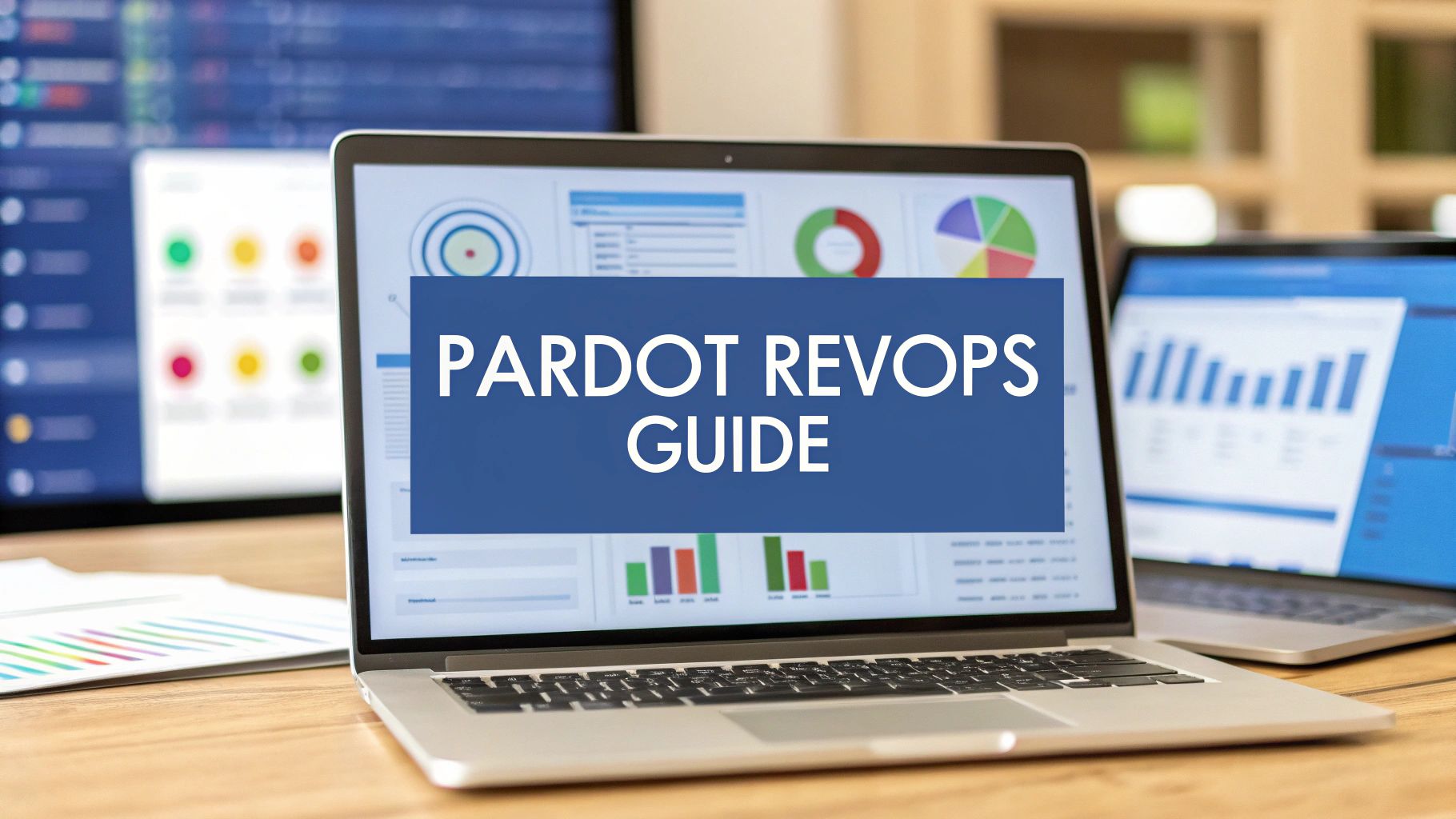
This dashboard view illustrates how Pardot helps you find and nurture the right leads, ultimately helping you close more deals and build a predictable pipeline.
For a RevOps leader, Pardot isn’t just another marketing tool—it’s the system of record for prospect engagement. It delivers the control and visibility to measure what’s working, optimize what isn’t, and prove marketing’s direct impact on revenue.
This strategic function is increasingly vital. The Canadian CRM market, where Pardot is a key player, was valued at USD 3.47 billion in 2022 and is projected for significant growth as companies seek sophisticated automation. You can discover more insights about the Canadian CRM market’s growth and its implications for the industry.
By creating essential harmony between teams, Pardot transforms a go-to-market strategy from a series of disconnected activities into a unified, high-performance revenue machine.
Mastering Pardot’s Core Automation Features
At its heart, Salesforce Pardot (now Marketing Cloud Account Engagement) is designed to transition marketing teams from manual outreach to sophisticated, behavior-driven campaigns. The tools that enable this transformation are Engagement Studio, dynamic content, and prospect tracking.
Think of these features as interconnected gears. Each one drives the next, working in concert to power perfectly timed interactions throughout the customer journey. Let’s break down how high-performing RevOps teams use this trio to build and accelerate their sales pipeline.
Once configured, this automated engine works continuously in the background, ensuring the right message reaches the right person at the right time, without requiring manual effort.
The Engagement Studio Playbook
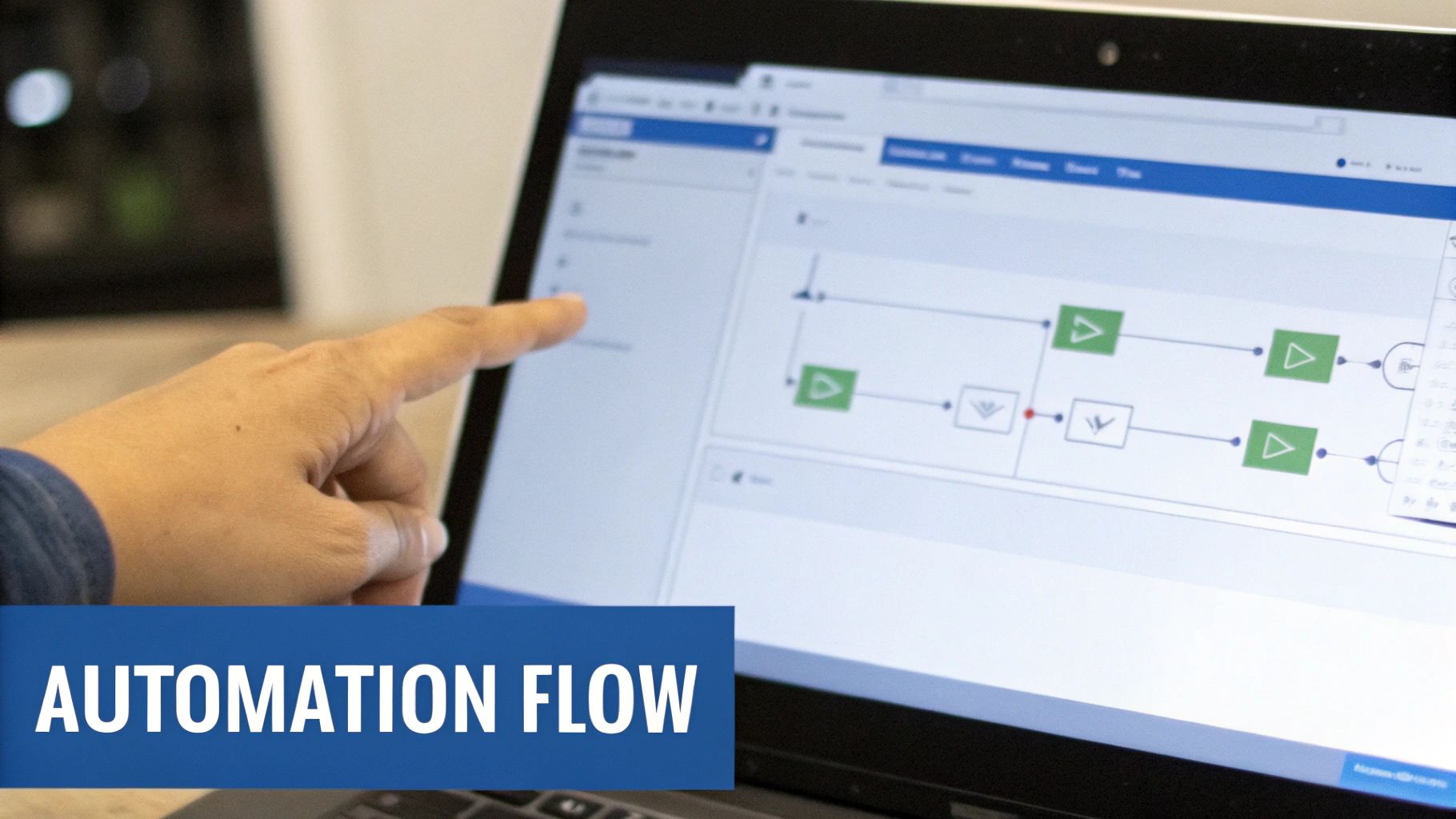
Engagement Studio is your digital playbook for orchestrating complex customer journeys that adapt in real time based on prospect actions. Its drag-and-drop interface allows you to build sophisticated flows that Pardot executes automatically.
For example, when a prospect clicks a webinar invitation, Engagement Studio can instantly trigger a personalized follow-up email, add points to their lead score, and create a notification for a sales representative—all without human intervention.
- Build multi-step nurture programs that react to clicks, page views, or form fills.
- Define specific actions, like sending an email, changing a field value, or notifying a user.
- Use wait steps and Einstein-powered logic to create nuanced and effective campaign flows.
Dynamic Content and Personalization
This is where you execute one-to-one personalization at scale. Dynamic content enables you to swap specific sections of an email or landing page, ensuring every prospect sees messaging tailored to their profile and interests.
The impact is similar to a storefront window that changes its display based on who is walking by. This approach maintains content relevance and can significantly improve engagement metrics.
“Using dynamic content in Pardot lifted our click-through rates by 45% within two months.”
– Marketing Automation Manager, Canadian Tech Firm
- Leverage existing data—like industry, location, or product interest—to tailor your copy.
- Configure conditional logic to present different offers or calls-to-action to distinct audiences.
- Create global snippets for reuse across multiple templates to maintain brand consistency.
Prospect Tracking and Lifecycle Analytics
Pardot’s prospect tracking is the connective thread that weaves every click, email open, and form submission into a unified timeline for each contact. This provides your RevOps team with a 360-degree view of the buyer’s journey, which is crucial for making data-driven decisions.
This granular insight fuels accurate attribution models, allowing you to draw a direct line from specific marketing initiatives to closed-won deals.
- Monitor web page views and campaign responses to score and qualify leads effectively.
- Analyze a prospect’s engagement history directly within Salesforce to help sales teams have more targeted conversations.
- Use automated completion actions to trigger alerts or assignment rules the moment a prospect shows buying intent.
| Feature | Benefit |
|---|---|
| Engagement Studio | Orchestrates complex, multi-path customer journeys in real time. |
| Dynamic Content | Delivers personalized messaging at scale to increase relevance. |
| Prospect Activity Dashboard | Provides granular visibility into every touchpoint for sales enablement. |
These features, working together, elevate Pardot from an email platform to a complete marketing automation engine. To maximize their effectiveness, ground your strategy in proven B2B email marketing best practices.
For concrete ideas on how to structure these campaigns, Check out our guide on marketing automation workflow examples.
Optimizing How the Features Work Together
The true power of Pardot is unlocked when you layer Engagement Studio, dynamic content, and prospect tracking. This integrated approach delivers seamless, context-aware journeys that build trust and drive action.
For example, you could automatically increase a prospect’s score when they view a case study. In the next email they receive, dynamic content could switch the banner to a testimonial from a customer in their industry. Every interaction feels intentional and perfectly timed.
- Use completion actions on forms and emails to update fields in your Salesforce CRM based on prospect behavior.
- Build dynamic content rules directly into Engagement Studio programs to adapt messaging mid-campaign.
- Review prospect lifecycle reports weekly to spot trends and refine your scoring models and content strategy.
This closed-loop system ensures your sales team is notified at the optimal moment, dramatically increasing conversion rates and reducing response times.
When these automation features are tightly integrated with Salesforce Sales Cloud, you enhance visibility and can accelerate lead response by up to 50%. Suddenly, marketing and sales are operating from a shared, data-driven perspective.
Connecting Pardot with Salesforce Sales Cloud
Connecting Salesforce Pardot to Sales Cloud isn’t merely a technical task; it’s the strategic move that unlocks its full potential. This integration dismantles the silos between marketing and sales, creating a single, shared view of every prospect and customer journey.
Think of it as building a direct bridge between two critical revenue functions. Marketing’s insights on prospect interests are instantly available to sales, and sales’ real-world feedback flows back. This constant data exchange ensures both teams work from the same playbook toward the same goals, eliminating guesswork.

Unlocking a True 360-Degree Customer View
At the core of this alignment is the Salesforce Connector. This mechanism syncs critical data—leads, contacts, accounts, and opportunities—between Pardot and Sales Cloud. Once connected, every marketing touchpoint, from an email open to a form submission, is logged directly on the Salesforce record for full visibility.
This means when a sales representative opens a lead record, they see the entire engagement history. It’s no longer just a name and an email. They see a complete timeline of that person’s interactions, providing the context needed for a smarter, more relevant conversation.
- Real-time Data Sync: Your sales team always has the latest marketing intelligence at their fingertips.
- Reduced Manual Entry: Automation eliminates copy-pasting updates, saving hours and preventing costly data errors.
- Consistent Reporting: Build unified dashboards that show the entire funnel, from the first marketing touchpoint to the closed-won deal.
Empowering Sales with the Pardot Lightning App
The integration extends beyond a simple data sync. The Pardot Lightning App embeds marketing tools and intelligence directly into the Salesforce interface where your sales team works every day. This isn’t about forcing them to adopt a new system; it’s about bringing actionable insights to them.
For a sales rep, this is a game-changer. They can view a prospect’s live activity feed, check their lead score, and add them to a nurture campaign without ever leaving Sales Cloud.
By putting marketing engagement data directly into the hands of sales, you shorten the sales cycle. Reps can prioritize the most engaged leads and tailor their pitch based on a prospect’s demonstrated interests, significantly increasing their probability of success.
This deep integration is a major reason why platforms like Salesforce Pardot are fueling business growth in Canada. IDC predicts the expanding Salesforce economy in Canada will create 71,700 new jobs and $36.8 billion in new business revenues by 2026, driven by companies leveraging connected systems to power their digital-first strategies.
Building a Foundation for Revenue Alignment
A properly configured connection between Pardot and Salesforce is the bedrock of an aligned revenue team. It transforms two separate departments into one cohesive, revenue-focused machine. While the technical setup requires careful planning, the strategic payoff is immense.
For those looking to maximize this connection, understanding the data flow is crucial. Our guide on the complete Pardot to Salesforce integration process provides a step-by-step breakdown.
Key benefits for RevOps and Sales Ops leaders include:
- Improved Lead Handoff: Automation can instantly assign a lead to a rep the moment they reach a predefined score, ensuring no opportunity goes cold.
- Smarter Sales Conversations: Reps can see exactly what content a prospect has engaged with, allowing them to skip generic introductions and get straight to addressing their needs.
- Closed-Loop Reporting: Marketing can finally track campaigns all the way to closed-won revenue in Salesforce, proving their direct impact on the bottom line.
Ultimately, connecting Salesforce Pardot with Sales Cloud is more than a technical integration. It’s an operational shift toward a transparent, data-driven culture where marketing and sales are perfectly synchronized to drive growth.
How to Actually Drive Revenue with Pardot
Understanding the features of Salesforce Pardot is one thing, but translating those features into measurable revenue is another. For any RevOps leader, the true test of a platform is its ability to solve real-world business challenges. It’s about leveraging technology to build a go-to-market strategy that accelerates the pipeline and demonstrates marketing’s financial contribution.
Let’s move beyond theory and explore how this works in practice. We’ll walk through common scenarios where Pardot becomes the command center for sophisticated marketing and sales strategies—proven playbooks you can adapt for your own organization.
Running Smarter Account-Based Marketing Plays
Account-Based Marketing (ABM) requires tight coordination between sales and marketing to pursue high-value accounts. Pairing Pardot with Salesforce creates the ideal environment for executing these targeted, multi-touch campaigns.
Imagine you are targeting a major enterprise client. Instead of a broad “spray and pray” approach, you can be incredibly precise.
- Pinpoint Key Players: Use Salesforce data to map the decision-makers at your target company.
- Create a Dynamic Target List: In Pardot, build a dynamic list that includes only these specific contacts.
- Nurture Based on Role: Launch an Engagement Studio program that delivers content tailored to each persona. The CFO might receive an ROI case study, while the VP of IT gets a technical whitepaper.
- Alert Sales to Intent: Configure automations that notify the account owner in Salesforce the moment a key contact downloads a critical asset or visits the pricing page.
This isn’t just marketing automation; it’s a coordinated conversation. Every touchpoint feels relevant and timely, guiding the entire buying committee closer to a decision.
Building Lead Scoring and Grading Models That Sales Will Actually Trust
Not all leads are created equal. A primary source of friction between sales and marketing is lead quality. Pardot’s scoring and grading system provides a data-driven solution, ensuring your sales team invests their time on prospects who are genuinely ready for a conversation.
It operates on two levels. Scoring tracks interest based on what a prospect does (e.g., +10 points for a demo request, +3 for an email open). Grading, on the other hand, measures how well they fit your ideal customer profile (e.g., ‘A’ for a Director in your target industry, ‘C’ for an intern).
A prospect with a high score (high interest) and a high grade (strong fit) is the definition of a Marketing Qualified Lead (MQL). This two-axis model removes subjectivity from the handoff process and builds a predictable, automated system that fosters trust with your sales team.
Optimizing this process directly impacts pipeline velocity. Canadian companies are achieving significant results; one IT firm saw its lead conversion rates increase by 30% and a 300% surge in revenue after using Pardot and Salesforce to automate campaigns and provide sales with real-time insights. You can learn more about Pardot’s impact on lead conversion here.
Designing Nurture Programs That Keep Deals Moving
In B2B, sales cycles can be long. Maintaining engagement without being intrusive is critical. Automated nurture programs built in Pardot’s Engagement Studio are your secret weapon for guiding prospects through the consideration phase without manual effort.
Picture this: a prospect downloads your introductory e-book and then goes quiet. Instead of letting that lead go cold, you can automatically enroll them in a long-term nurture campaign.
- The Gentle Follow-Up: A week later, Pardot automatically sends a link to a related blog post.
- The Path Divides: If they click the link, they receive an invitation to an upcoming webinar. If not, they get a different, more high-level piece of content.
- The Score Increases: With every click, download, or page view, their lead score continues to climb.
- The Handoff: Once their score reaches a predefined threshold (e.g., 100 points), the program automatically creates a task in Salesforce, alerting a sales rep that it’s time to connect.
This strategic patience builds a genuine relationship over time. By consistently delivering value, your company remains top-of-mind when they are finally ready to buy.
A RevOps Framework for Pardot Implementation
A successful Pardot implementation is built on a strategic foundation, not just a technical checklist. For RevOps and marketing operations leaders, a rushed setup is a recipe for future challenges, leading to messy data, low sales adoption, and a powerful tool that fails to deliver ROI.
The only way to build a true revenue-driving machine is to treat implementation as a strategic project from day one. This isn’t about simply enabling features; it’s about embedding your go-to-market strategy into the platform’s architecture. A thoughtful framework helps you avoid common pitfalls that turn a significant investment into expensive shelfware.
Phase 1: Foundational Technical Setup
Before building your first email template, the technical groundwork must be flawless. These initial steps are non-negotiable. Errors here will sabotage every campaign by crippling email deliverability and tracking from the outset.
- DNS Configuration: Properly setting up your CNAME, SPF, and DKIM records is the first priority. These records authenticate your domain with email servers, which is critical for landing in the inbox instead of the spam folder.
- Tracker Domains: Establish a tracker domain that aligns with your brand. This ensures that all tracked links appear professional and trustworthy, not like a third-party URL.
- Salesforce Connector v2: The initial sync between Pardot and Salesforce is the most critical part of the setup. You must meticulously map your fields and define the “source of truth” for each data point to prevent sync errors and data chaos.
Think of this phase as pouring the concrete foundation for a skyscraper. It’s not the most visible part, but if you rush it or cut corners, the entire structure will be unstable.
Phase 2: Strategic Architecture and Governance
With the technical plumbing in place, it’s time to design the internal blueprint for your Pardot account. This is where you build a logical system that can scale with your team and marketing initiatives. A disorganized folder structure is one of the fastest ways to create operational chaos.
A scalable architecture begins with a clean, intuitive folder hierarchy. Most teams find success organizing by business unit, region, campaign type, or fiscal year. Whatever you choose, consistency is key. Every team member should be able to locate assets without confusion.
Simultaneously, you must establish clear user roles and permissions. Define who can create, edit, and send communications. This isn’t bureaucracy; it’s a governance framework that protects your brand from accidental email blasts and maintains operational discipline.
Phase 3: Lead Management and the Sales Handoff
This is the phase where marketing and sales operations must be in perfect alignment. A well-defined lead management process is what converts marketing’s efforts into actionable opportunities for the sales team. Without clear rules of engagement, leads are dropped, friction arises, and trust between departments erodes.
The handoff process comes down to a few key decisions:
- Define Your MQL: Convene sales and marketing stakeholders to agree on the exact scoring and grading criteria that define a Marketing Qualified Lead (MQL). This data-driven definition removes subjectivity from the handoff.
- Establish Assignment Rules: Use a combination of automation rules in Pardot and assignment rules in Salesforce to route MQLs to the correct sales representative or queue instantly. Lead response speed is critical.
- Create an SLA: A Service Level Agreement (SLA) is not optional. It documents the agreed-upon timeframe for sales to follow up on an MQL, creating mutual accountability and ensuring hot leads are addressed promptly.
Executing a robust framework like this requires experience and careful planning. For companies seeking to build their setup correctly from the start, engaging professional marketing automation implementation services can provide the strategic guidance needed to avoid common mistakes and accelerate your return on investment.
The Future of Pardot with AI and Predictive Tools
Marketing automation is evolving beyond simple “if this, then that” workflows. We are entering an era of predictive strategy, and Salesforce Pardot (now Marketing Cloud Account Engagement) is at the forefront of this shift. By integrating artificial intelligence through Salesforce Einstein, the platform is transforming from a reactive tool into an engine that anticipates prospect needs.
This is more than a new feature; it’s a fundamental change in how marketing and RevOps teams can build pipeline. For leaders, it means adopting tools that can identify your best leads, sometimes before they have even filled out a form.

From Reactive Analysis to Proactive Strategy
For years, marketing operations involved analyzing past campaign data to inform future actions. AI instantly upgrades this process. Tools like Einstein Behavior Scoring constantly analyze thousands of digital footprints to flag prospects exhibiting buying intent, allowing your sales team to engage at the perfect moment.
This predictive power changes the dynamic between marketing and sales. Instead of just delivering a list of MQLs based on fixed rules, marketing can now provide a prioritized queue of prospects statistically proven to be most likely to convert.
- Einstein Lead Scoring: This goes beyond manual point systems, analyzing historical data to uncover hidden conversion patterns.
- Einstein Campaign Insights: This feature automatically identifies anomalies and trends in your campaigns, highlighting what truly resonates with your audience.
- Einstein Key Account Identification: This helps pinpoint new companies that match the profile of your best customers, focusing your Account-Based Marketing (ABM) efforts.
The strategic value of AI in Pardot is its ability to find the signal in the noise. It enables your team to stop guessing which leads to pursue and start acting on data-backed predictions, resulting in greater sales efficiency and a faster pipeline.
Optimizing the Entire Revenue Funnel
AI’s role extends beyond lead identification. It helps optimize every stage of the funnel, from the first click to a signed contract. Predictive tools can determine the best time to send an email, suggest which content will advance a deal, and even provide sales reps with smart talking points based on a prospect’s specific activity.
This intelligent automation helps RevOps leaders build a leaner, more powerful go-to-market machine. To understand the broader context of this technological shift, it’s worth exploring the wider AI’s impact on marketing strategies. Integrating these tools into your workflow ensures your marketing efforts not only keep pace with the competition but pull ahead.
Your Pardot Questions, Answered
Navigating the Salesforce ecosystem can be complex, and questions inevitably arise. For RevOps, marketing ops, and sales leaders, selecting the right tools for your technology stack is a critical decision. Here are clear, professional answers to the most common questions about Salesforce Pardot (now Marketing Cloud Account Engagement).
Pardot vs. Marketing Cloud: What’s the Real Difference?
This is the most frequent question we encounter. The simplest distinction is B2B versus B2C.
Salesforce Pardot was built specifically for B2B marketing. Its architecture is designed to manage long, complex sales cycles involving multiple decision-makers. It excels at lead scoring, nurturing campaigns, and aligning with sales teams who operate within Salesforce CRM.
Conversely, Marketing Cloud Engagement is designed for high-volume B2C communication. It focuses on one-to-one customer journeys across email, SMS, social media, and other channels. It is the ideal solution for retail, e-commerce, or consumer-focused businesses managing millions of individual interactions.
How Does Pardot Handle Lead Scoring and Grading?
Pardot uses a sophisticated two-part system to identify which leads are ready for sales engagement. This is a core function of the platform.
- Scoring: This is based on a prospect’s behavior and measures their level of interest. Actions like opening an email, visiting a pricing page, or downloading a whitepaper add points to their score, indicating engagement.
- Grading: This is based on a prospect’s profile and measures their fit for your business. It evaluates data points like job title, industry, and company size to assign a letter grade (A through F).
The optimal lead is one with both a high score and a high grade. This identifies a prospect who is not only highly engaged but also matches your ideal customer profile. This is the data-driven definition of a Marketing Qualified Lead (MQL).
Can You Use Pardot Without Salesforce Sales Cloud?
Technically, yes, but it is almost never recommended. Operating Pardot without a tight integration to Sales Cloud undermines its primary purpose as a B2B revenue engine.
The power of Pardot is unlocked through the seamless, bidirectional data sync between marketing and sales. This creates a single source of truth and a complete view of the customer. Breaking this connection creates data silos, hinders sales enablement, and makes closed-loop reporting—which proves marketing’s ROI—nearly impossible.
Is Salesforce Pardot a Good Choice for Small Businesses?
Yes, it can be an excellent choice. Pardot is designed to scale and is effective for B2B companies of all sizes, including small and medium-sized businesses with a dedicated sales team.
Salesforce offers different editions—Growth, Plus, and Advanced—allowing you to select a plan that aligns with your current needs and budget. For smaller teams, Pardot provides powerful automation and lead management tools that create significant efficiency and help prove marketing’s contribution to revenue, often without requiring a large team.
Is your Salesforce Pardot instance driving the revenue you expected? The team at MarTech Do conducts comprehensive system audits to uncover hidden opportunities and aligns your marketing operations for measurable growth. Find out how we can optimize your go-to-market ROI.